Studio
STUDIO MASSA, MOROCCO
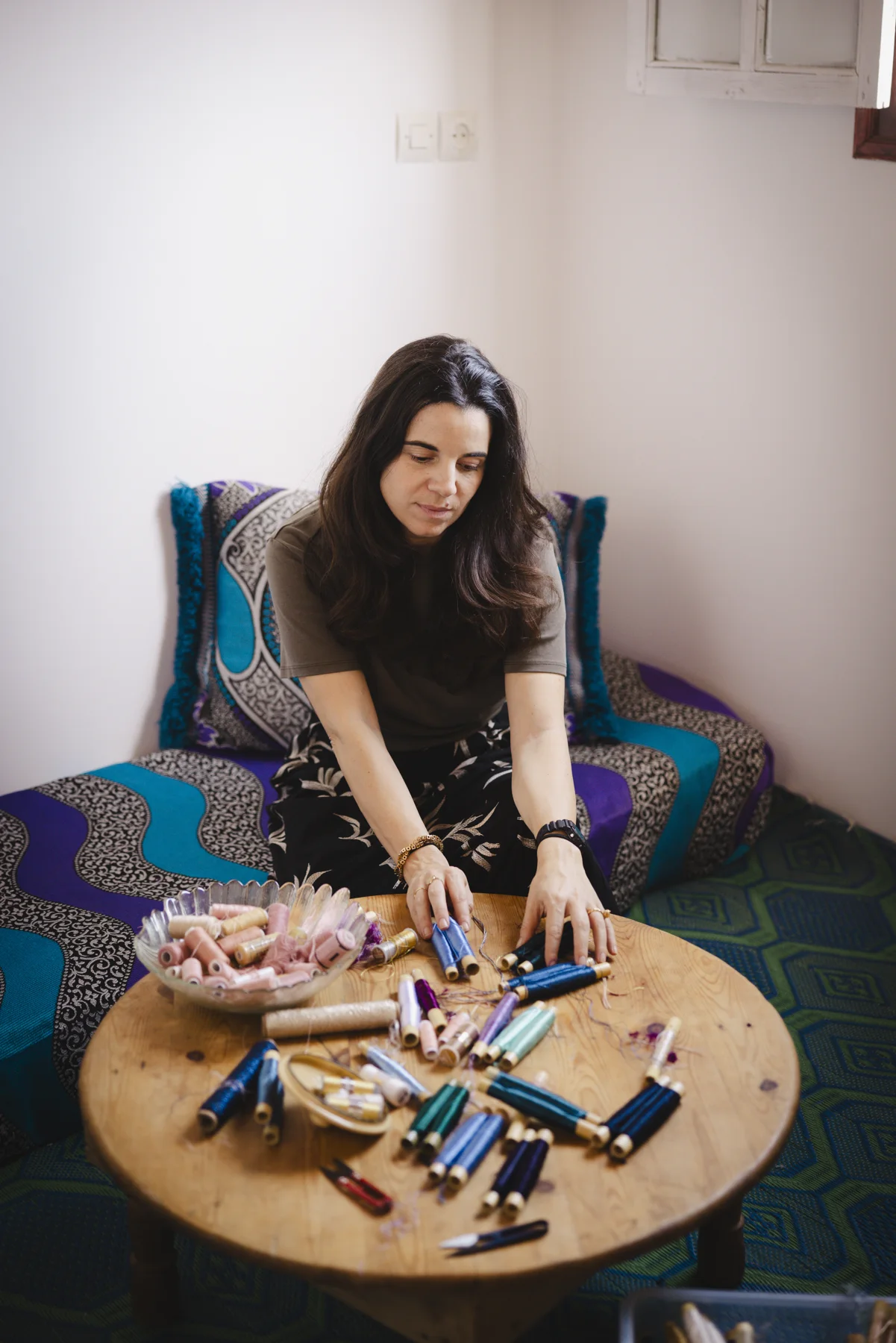
In 2022, Margaux Derhy established an embroidery studio in Sidi R'bat, Souss-Massa region, where her paternal family originates.
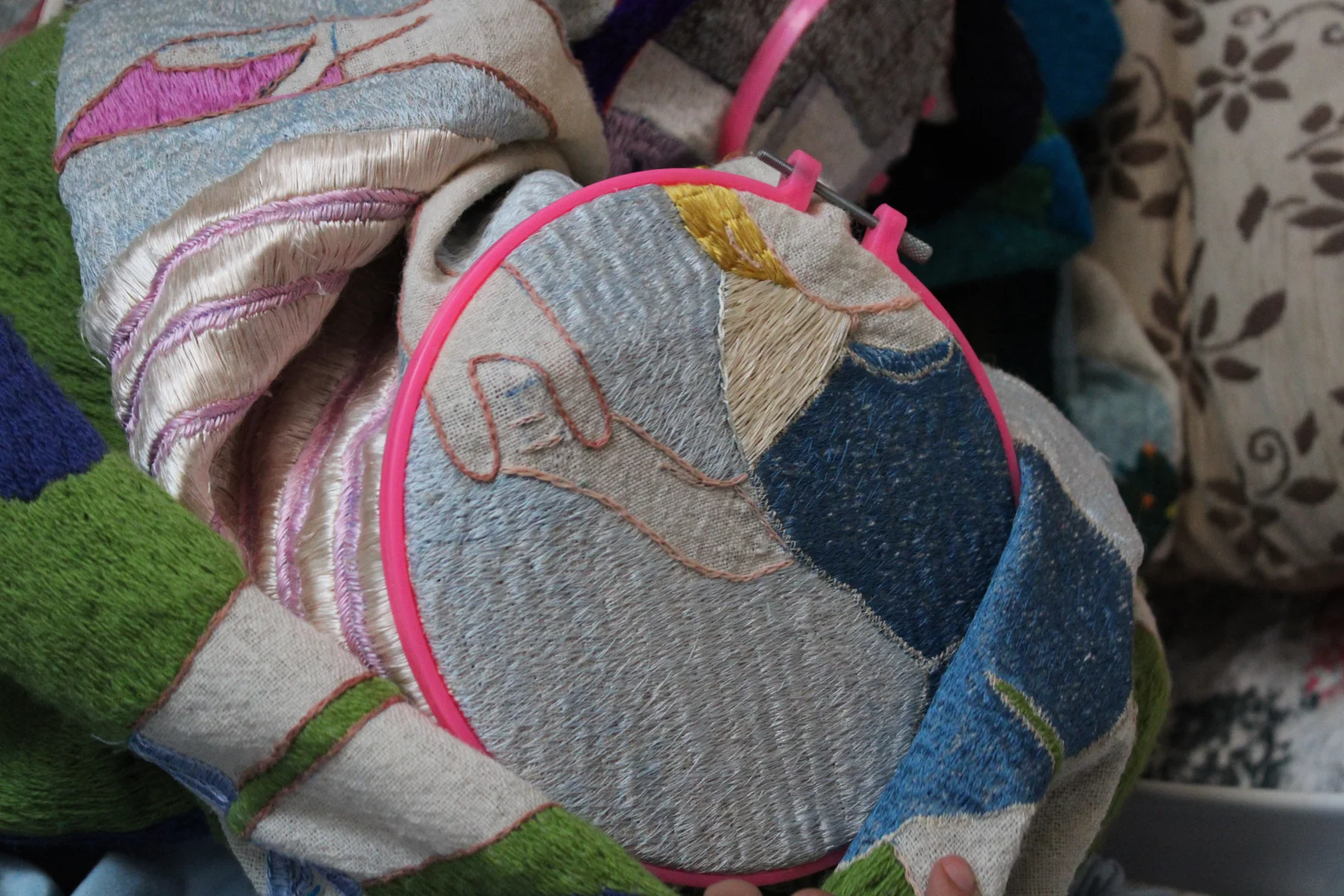
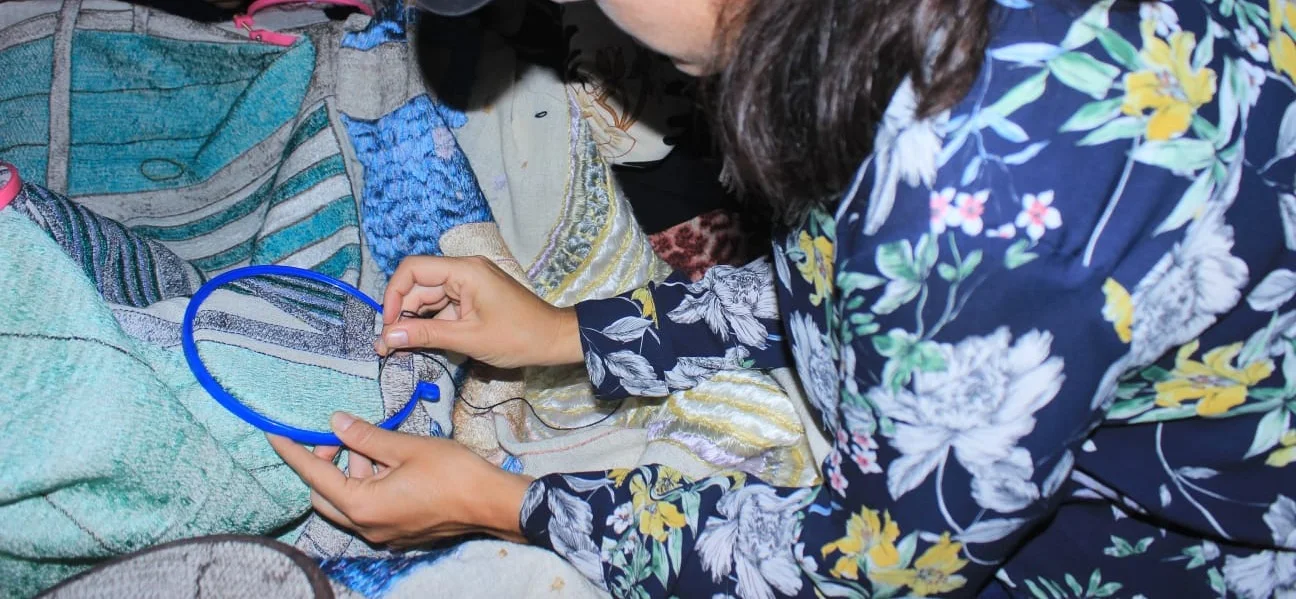
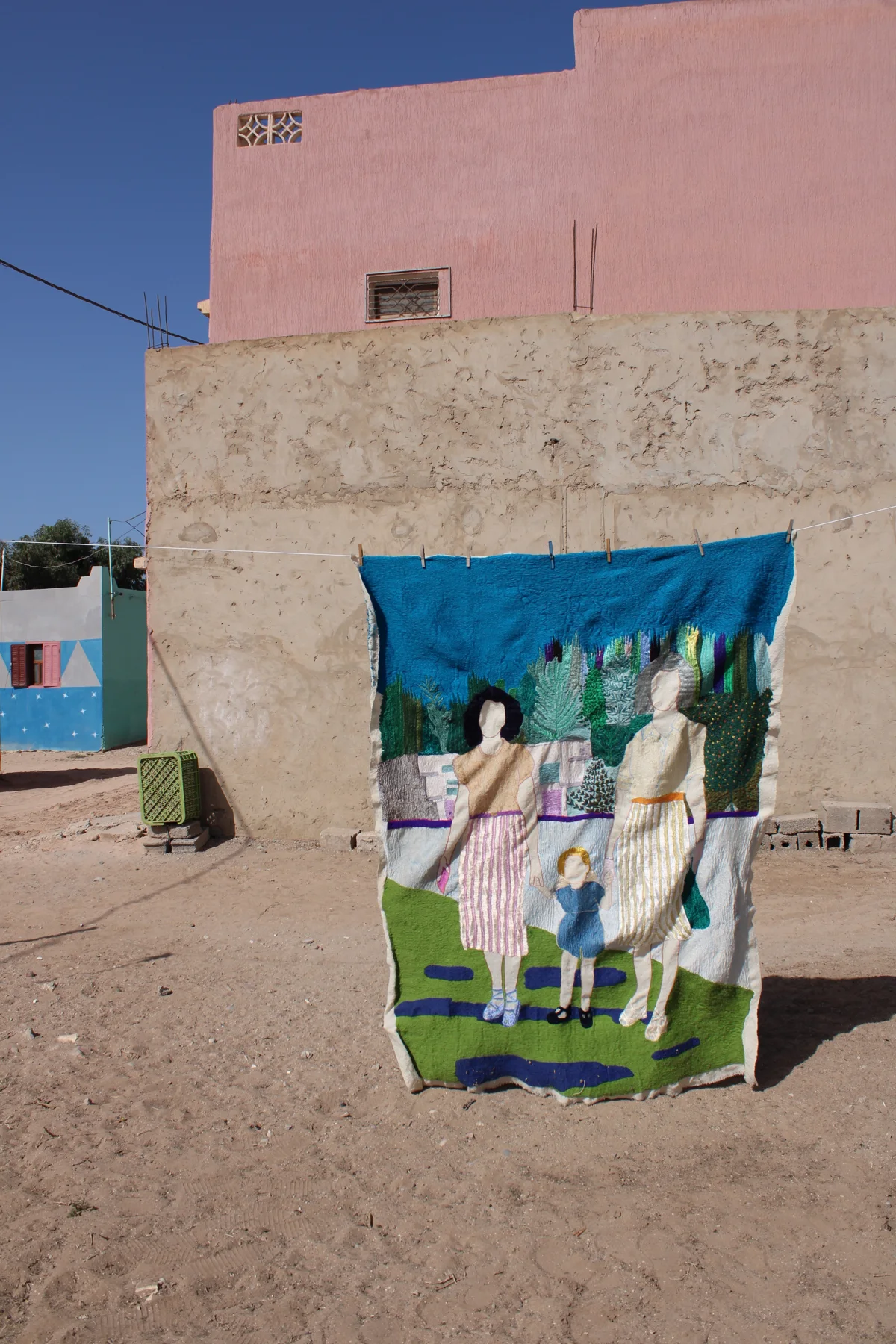
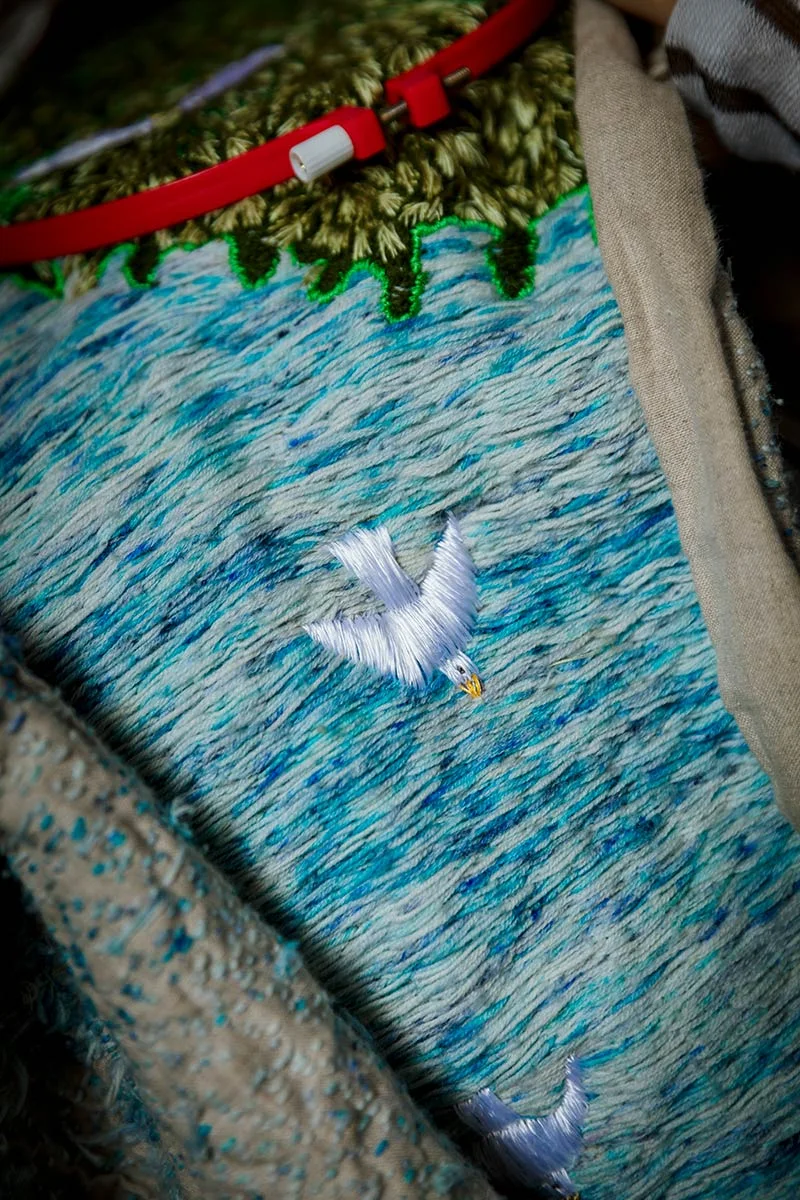
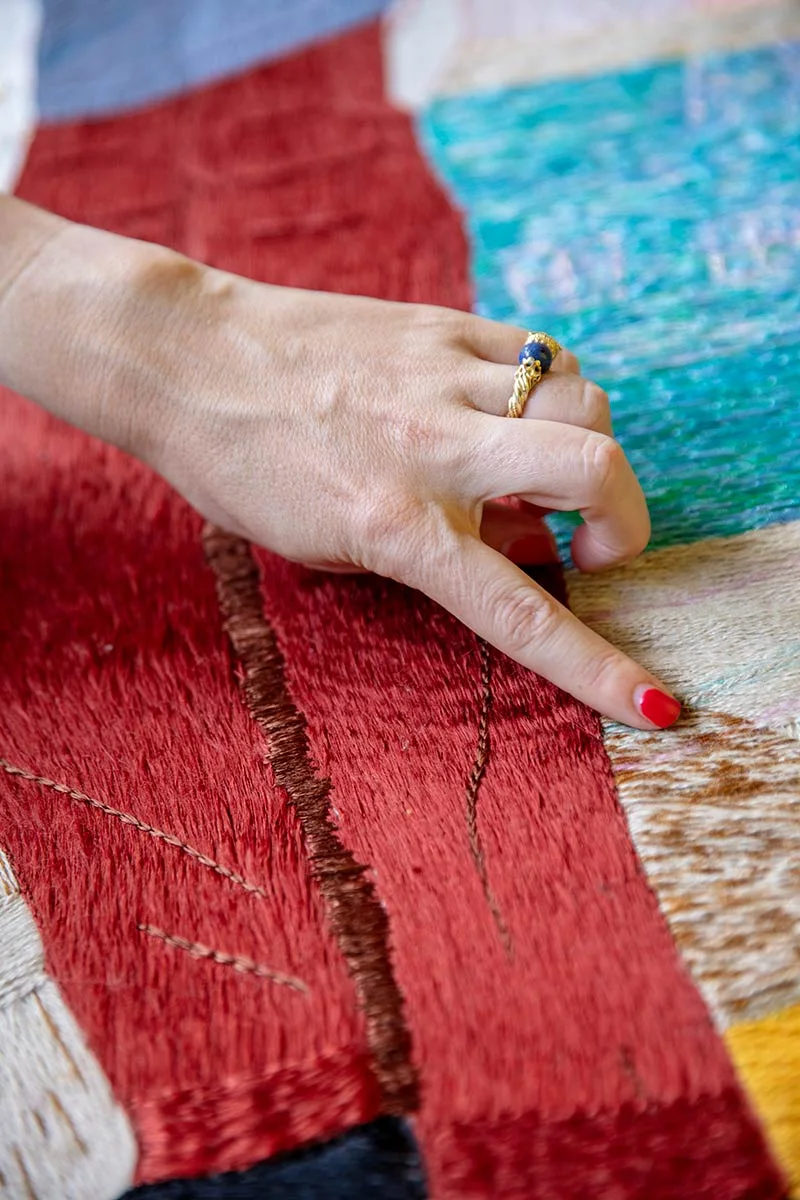
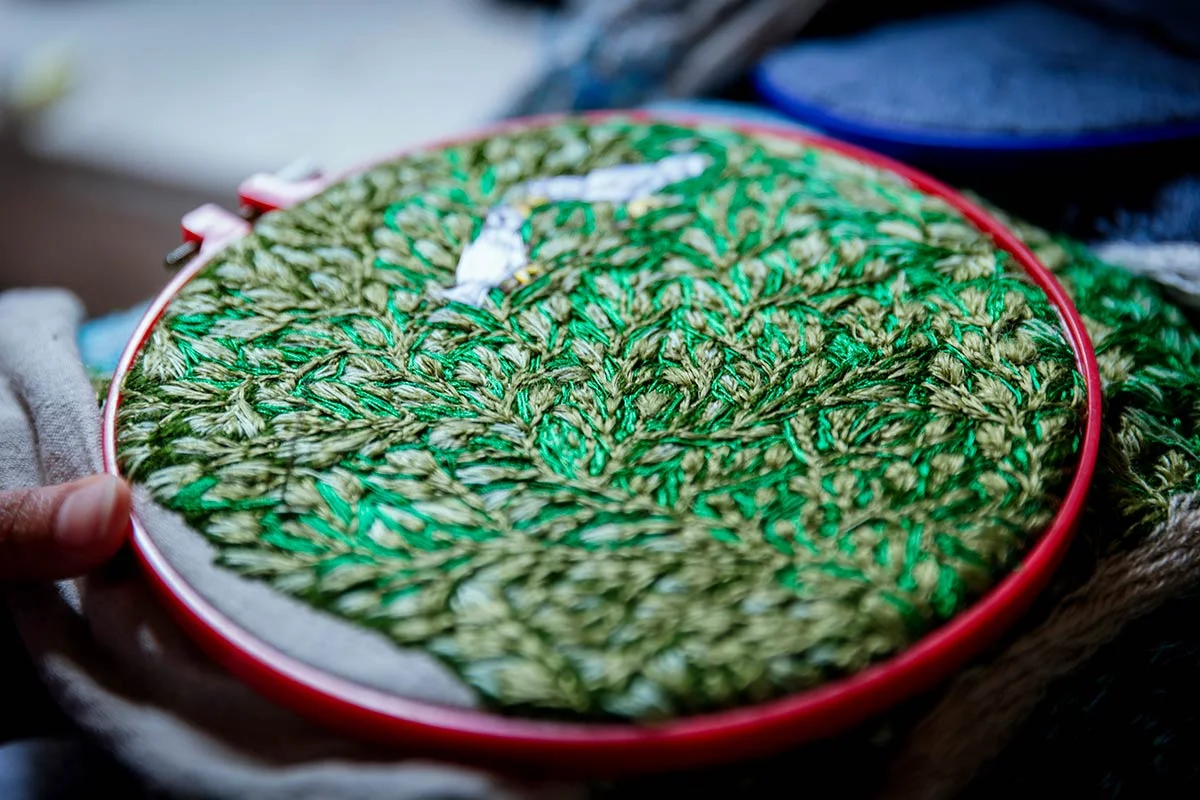
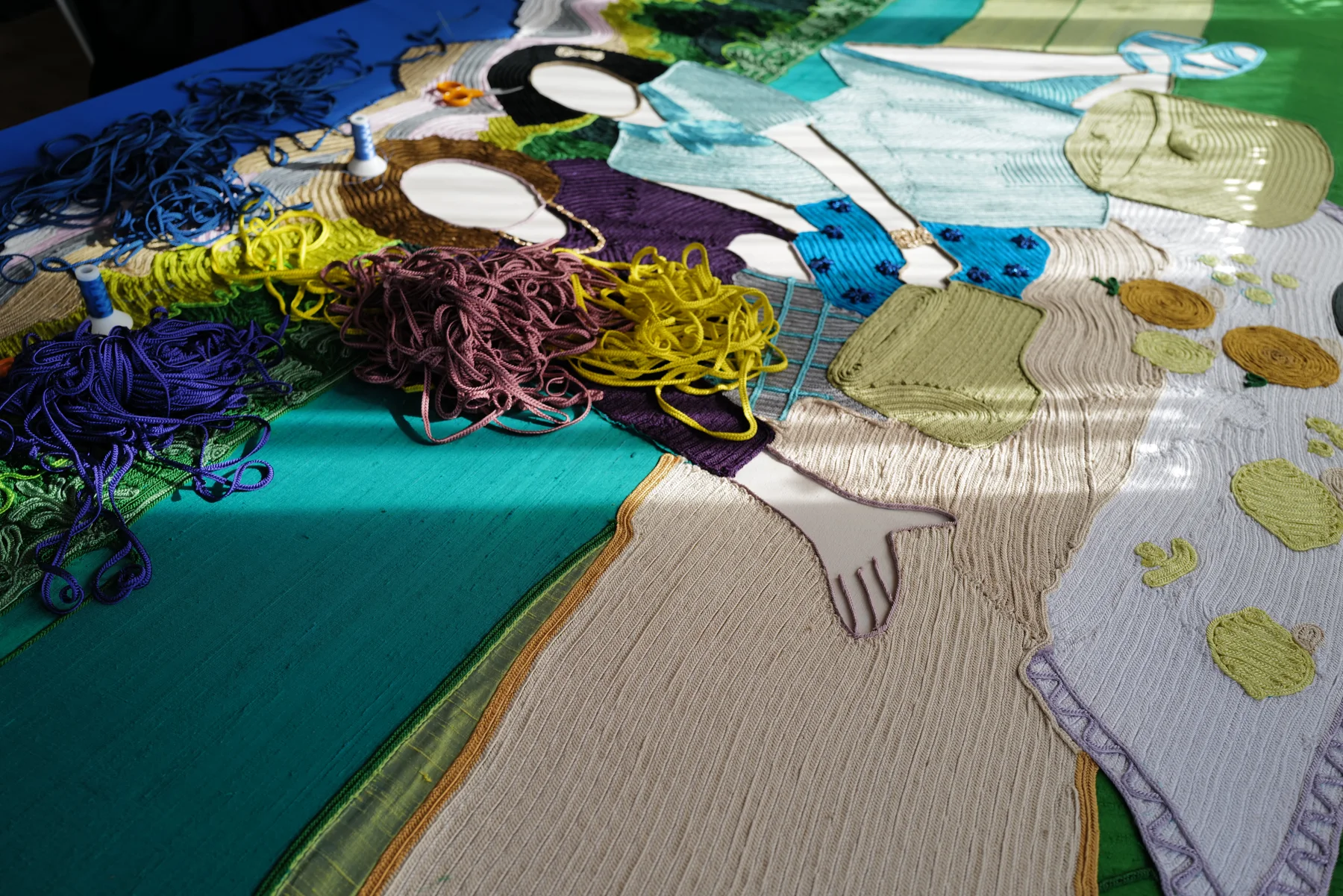
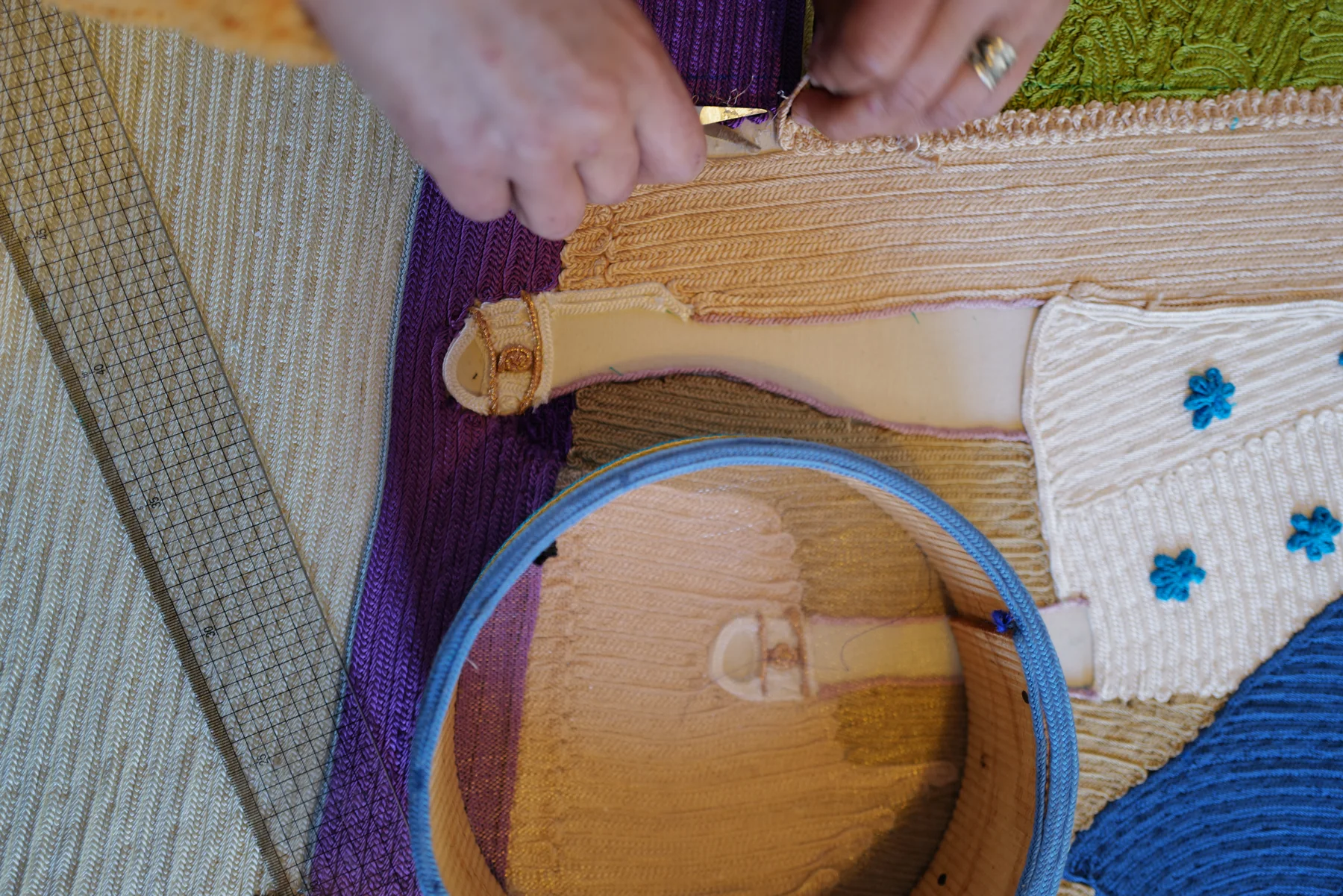
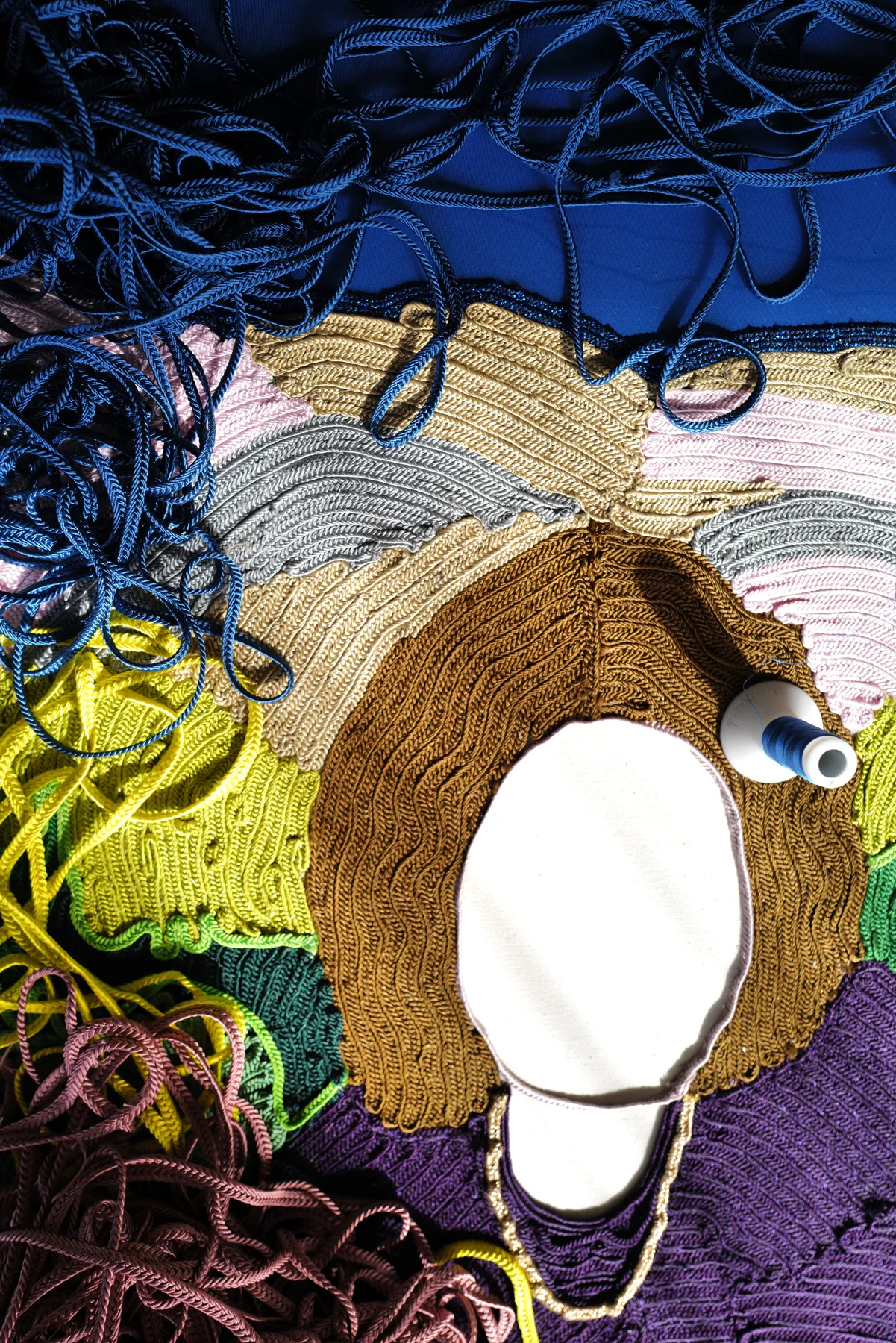
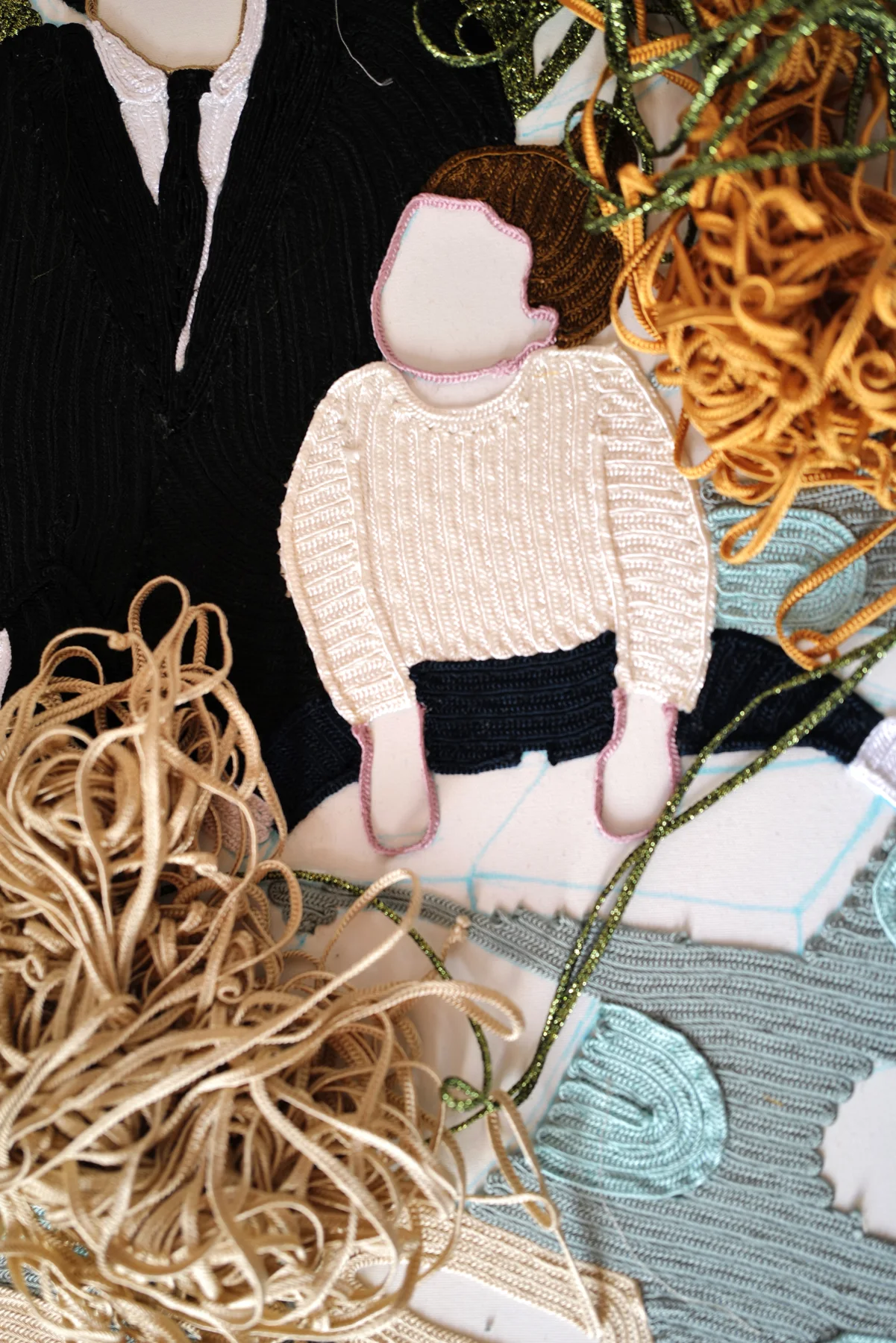
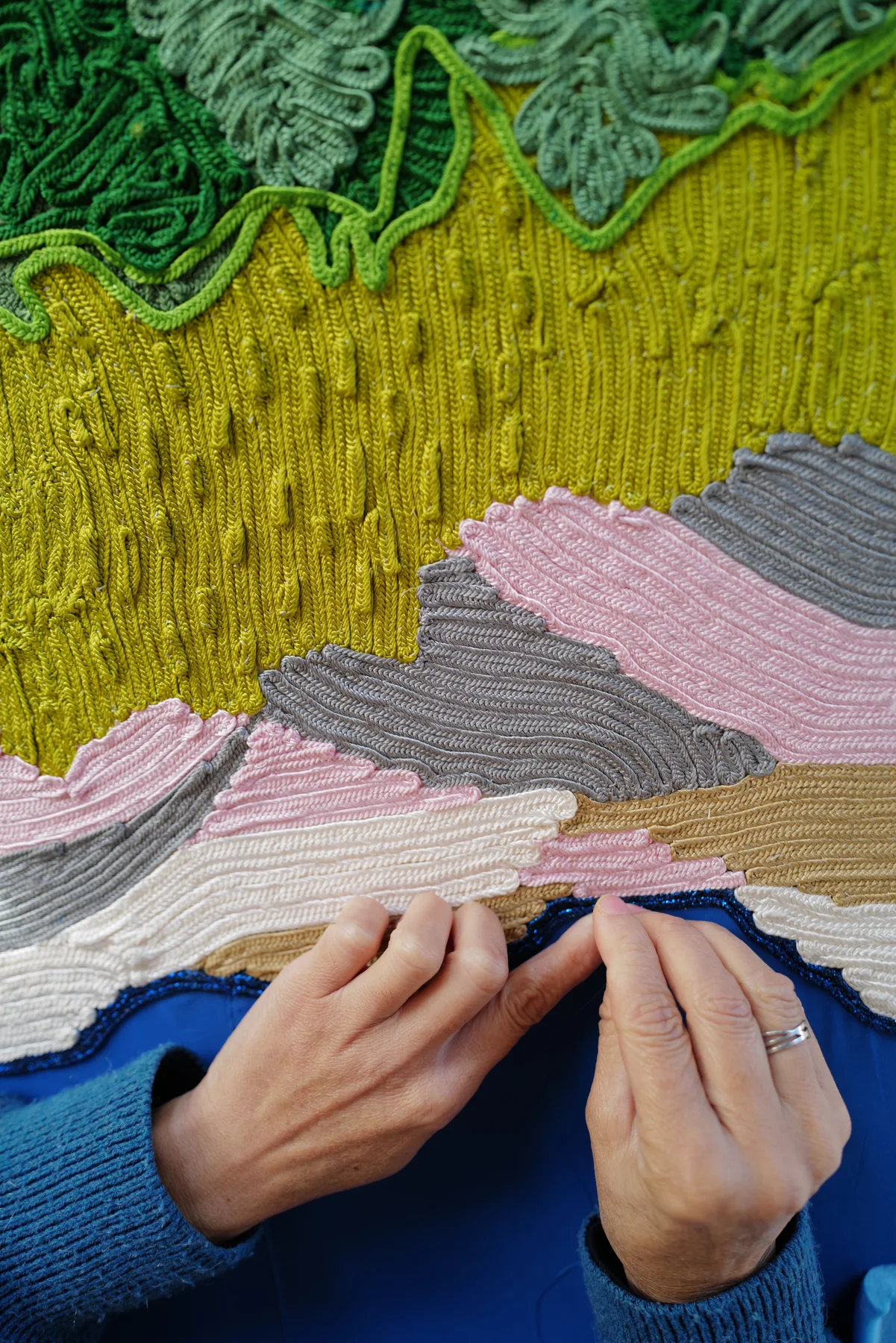
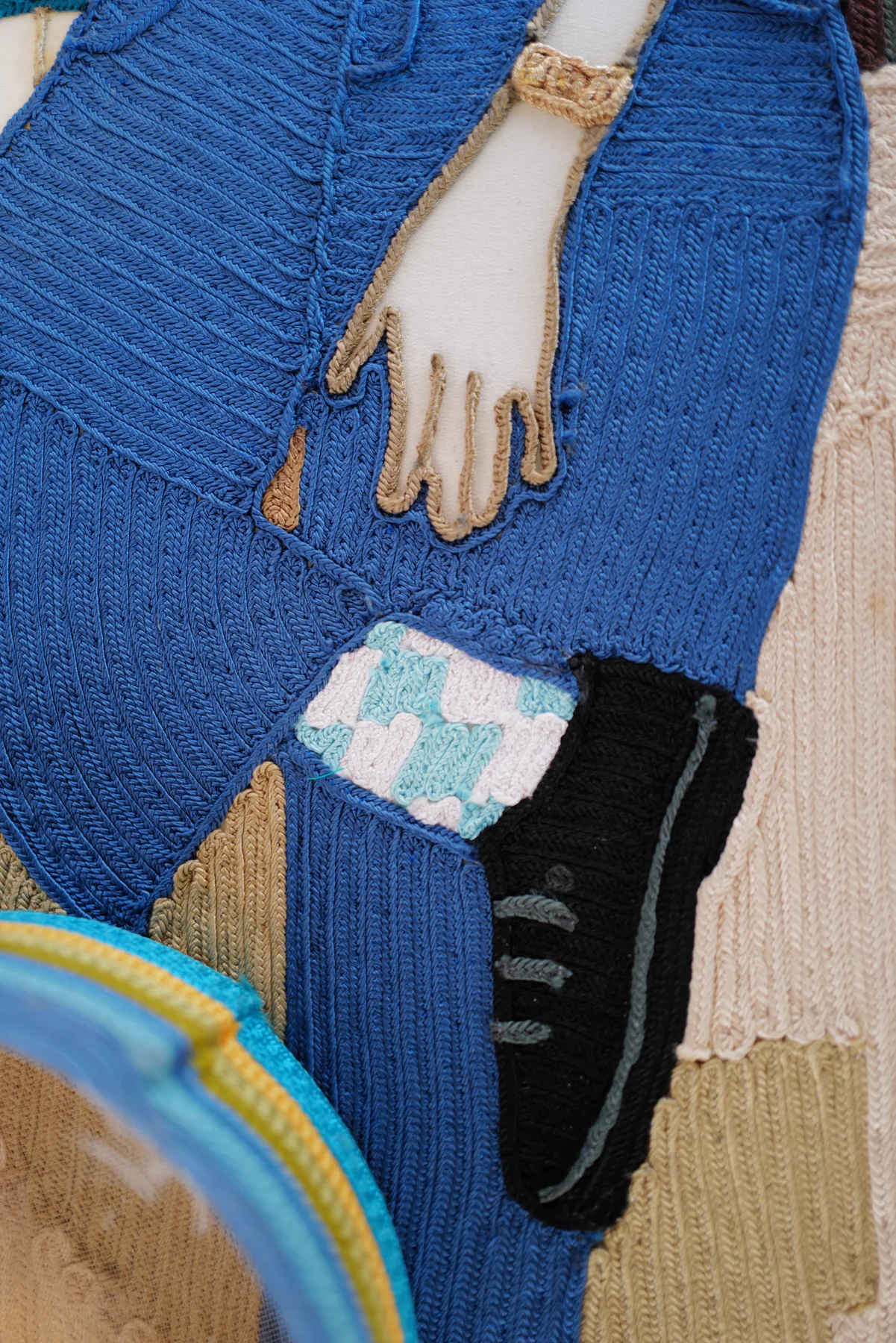
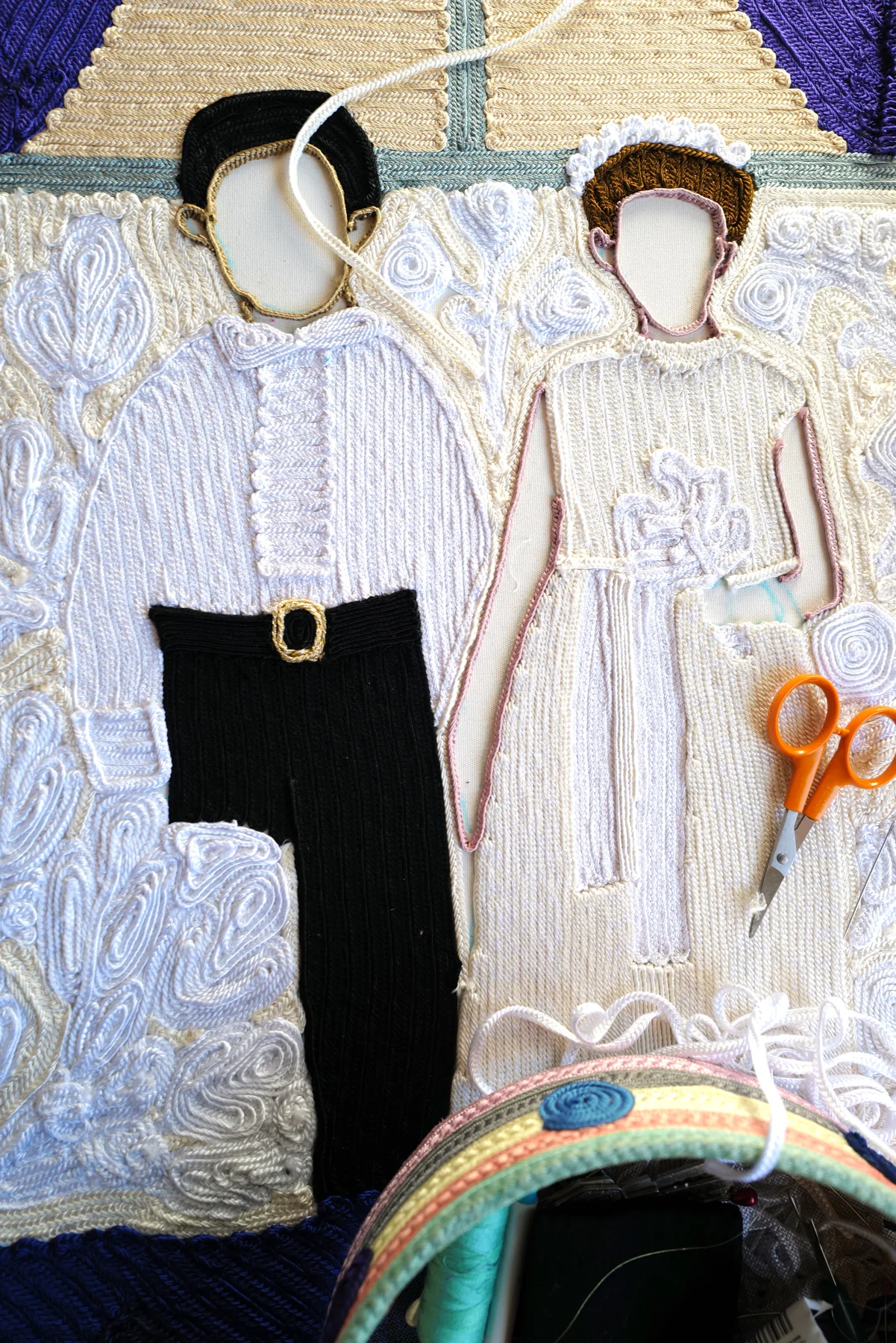
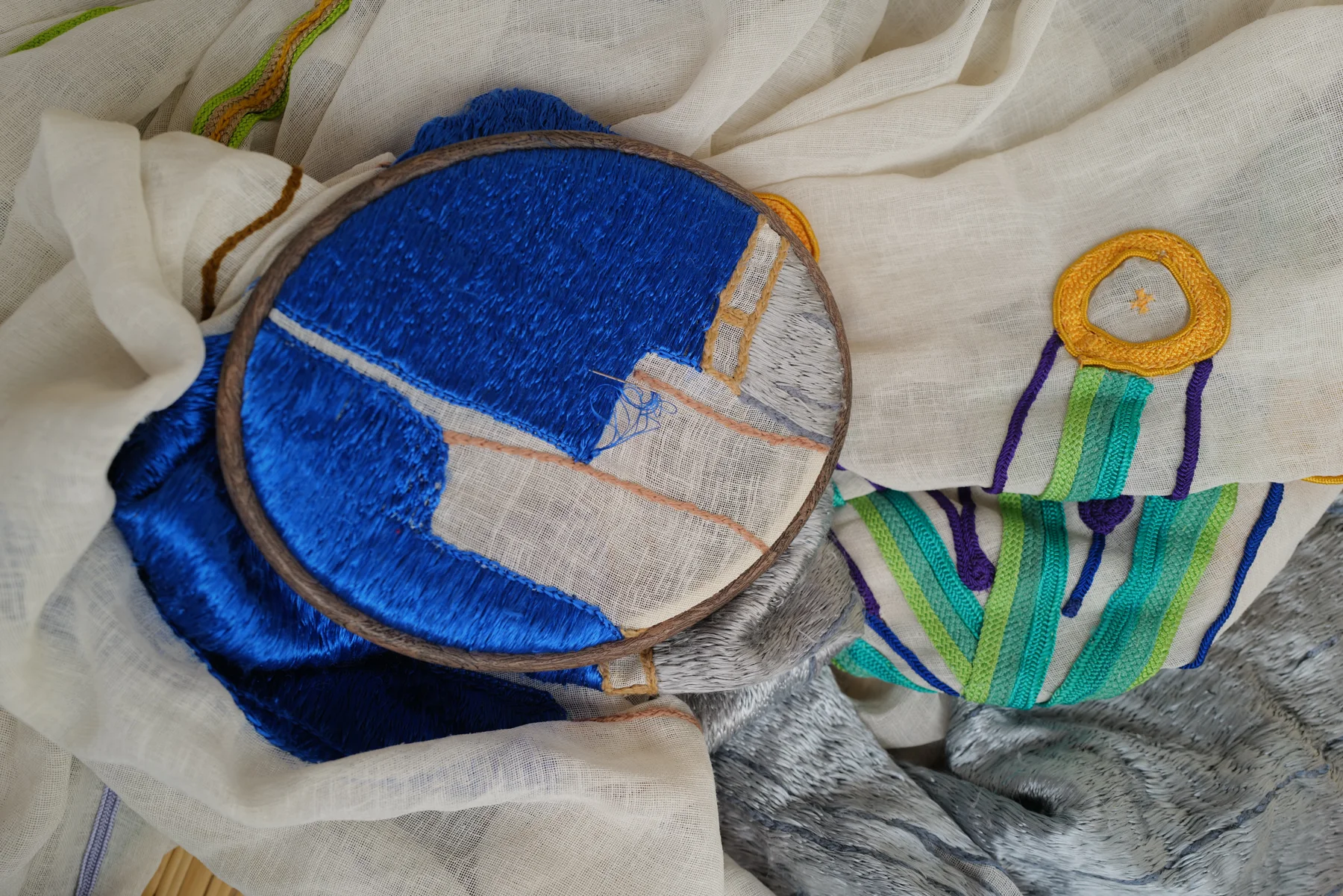
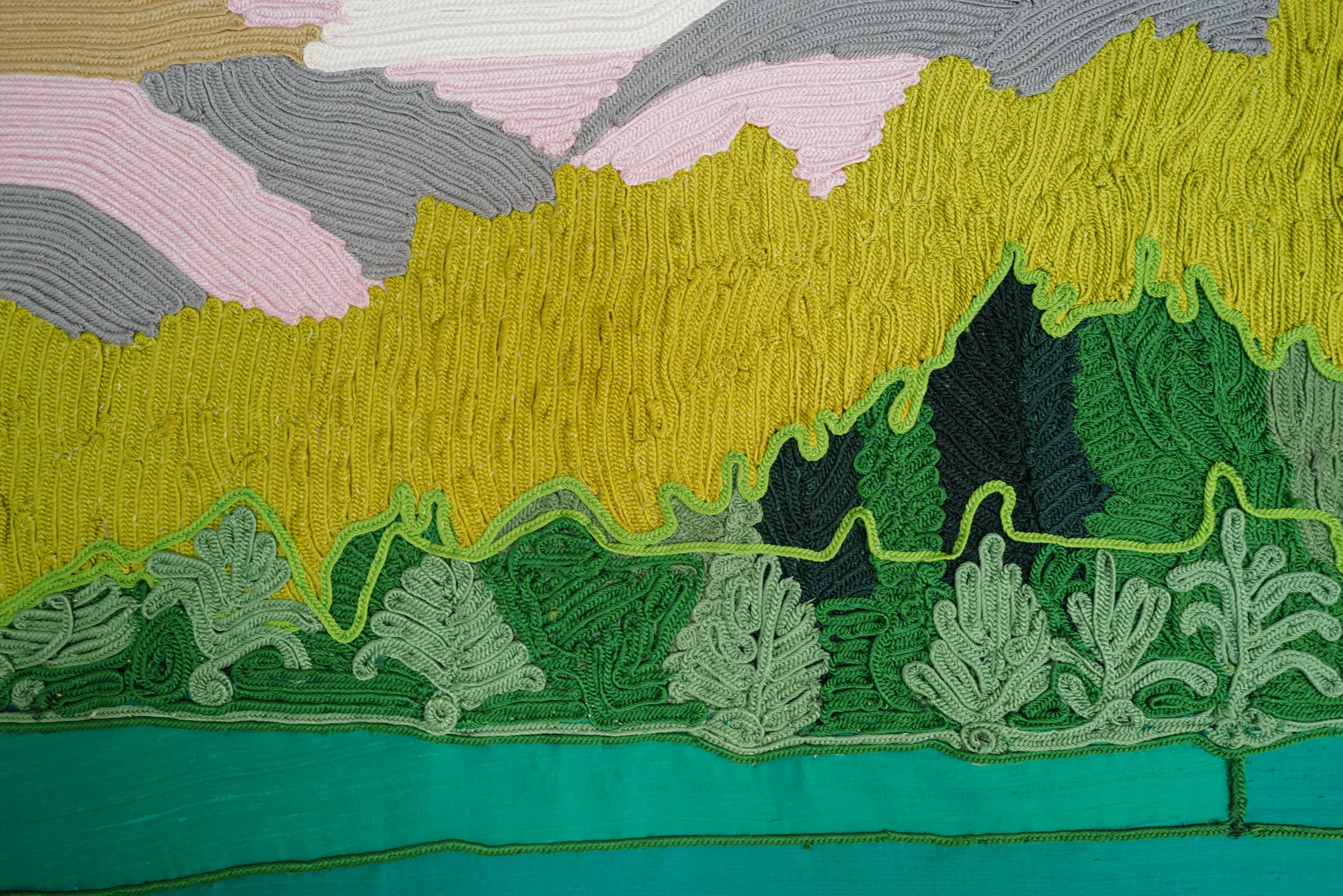
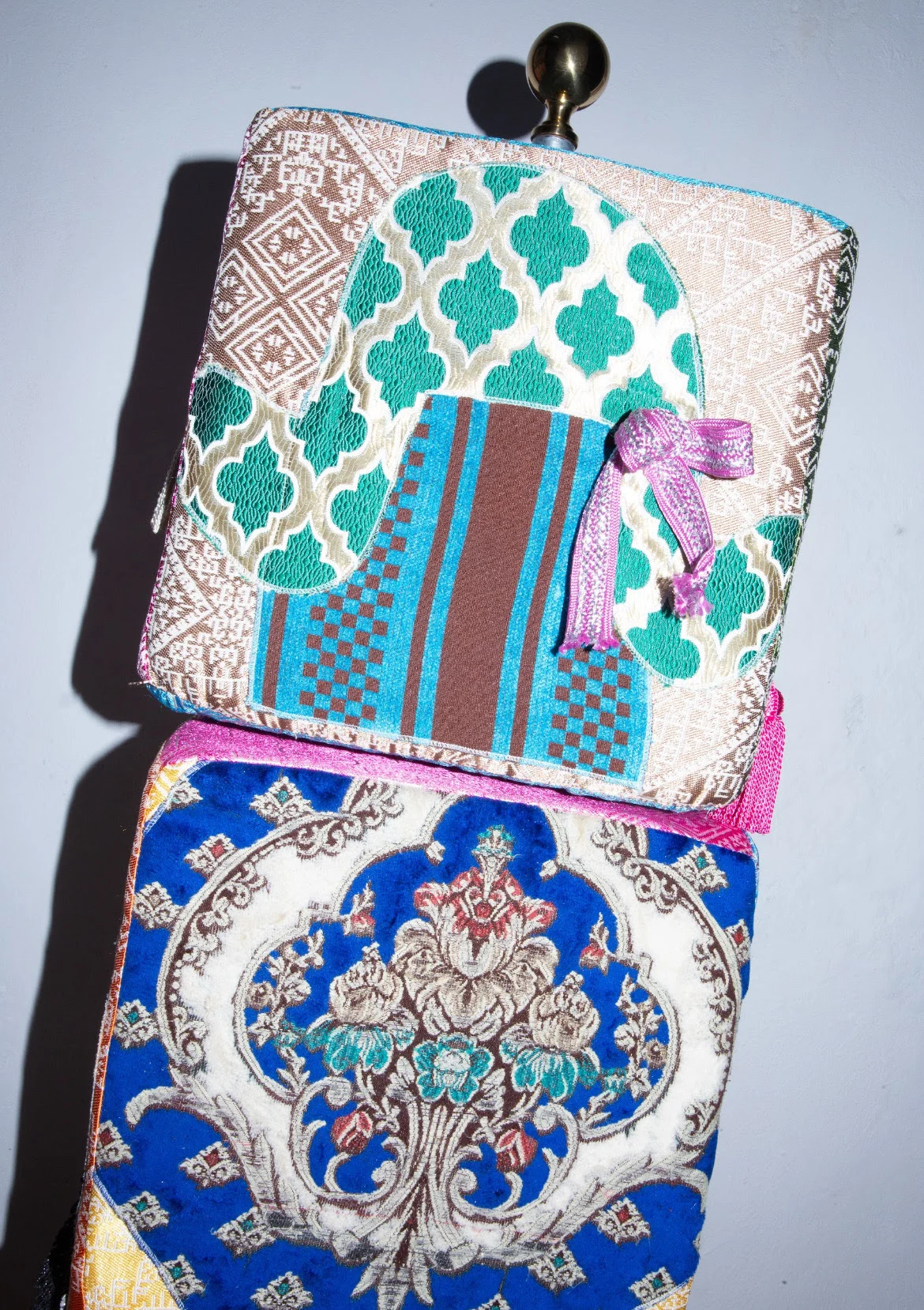
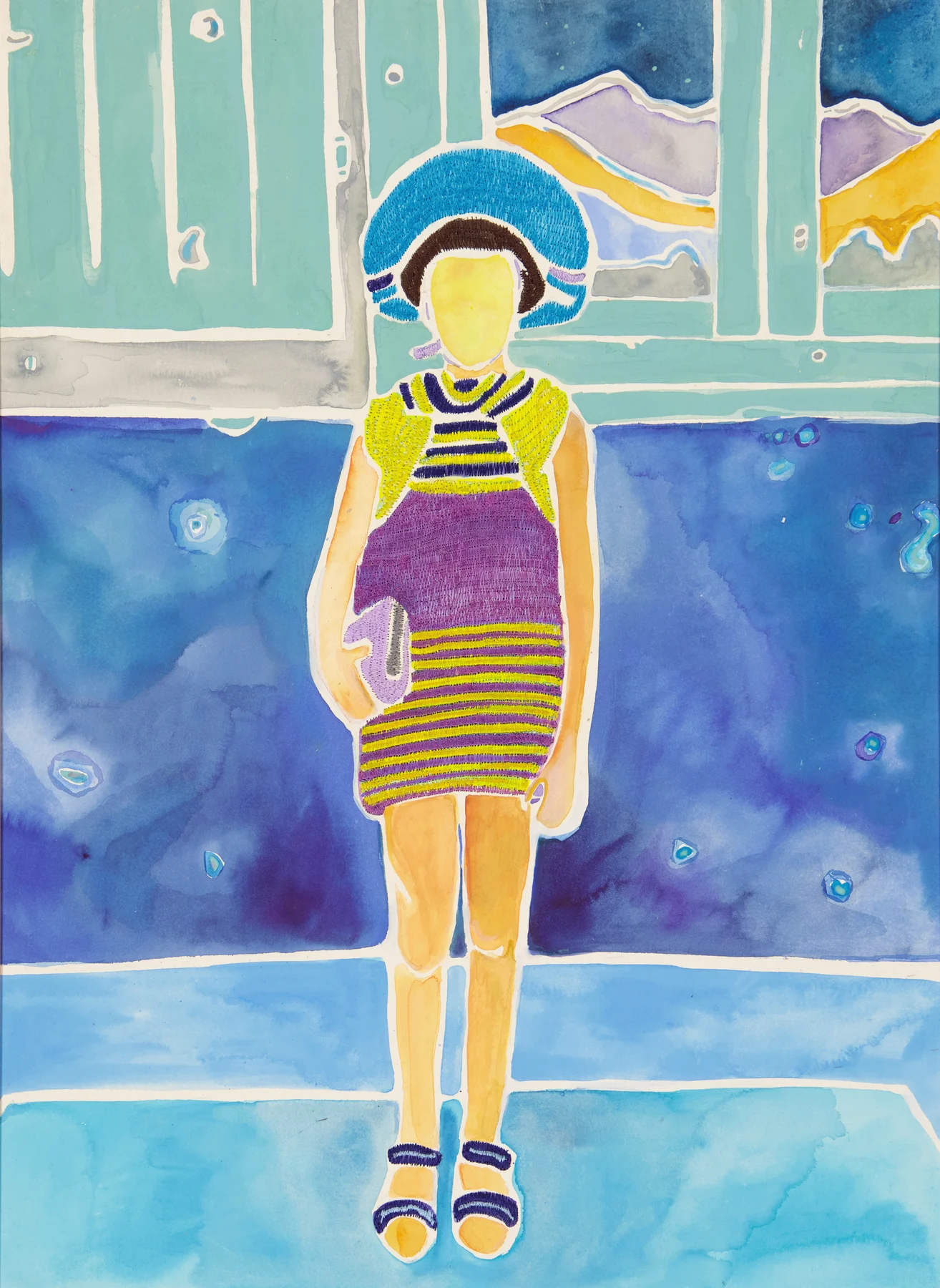
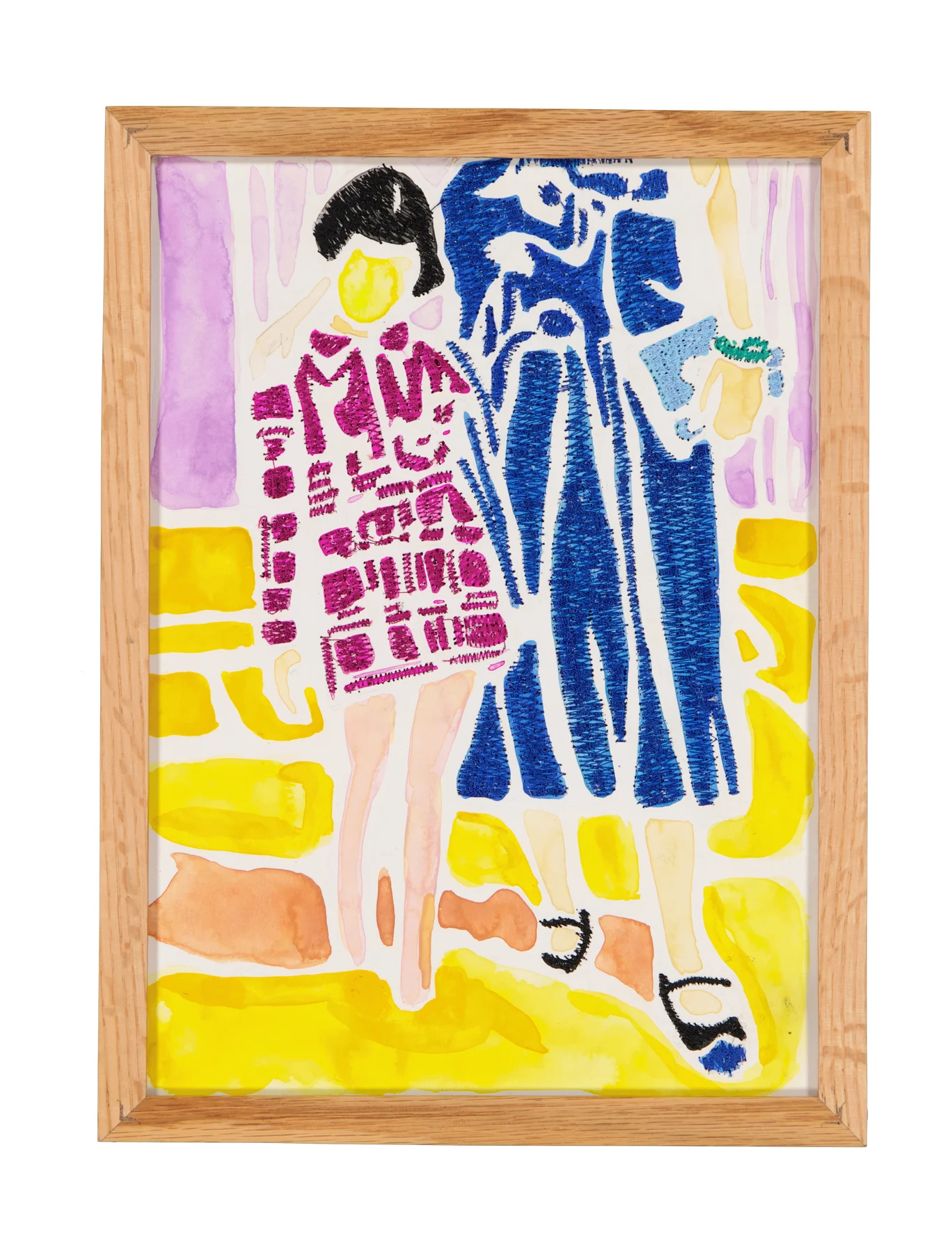
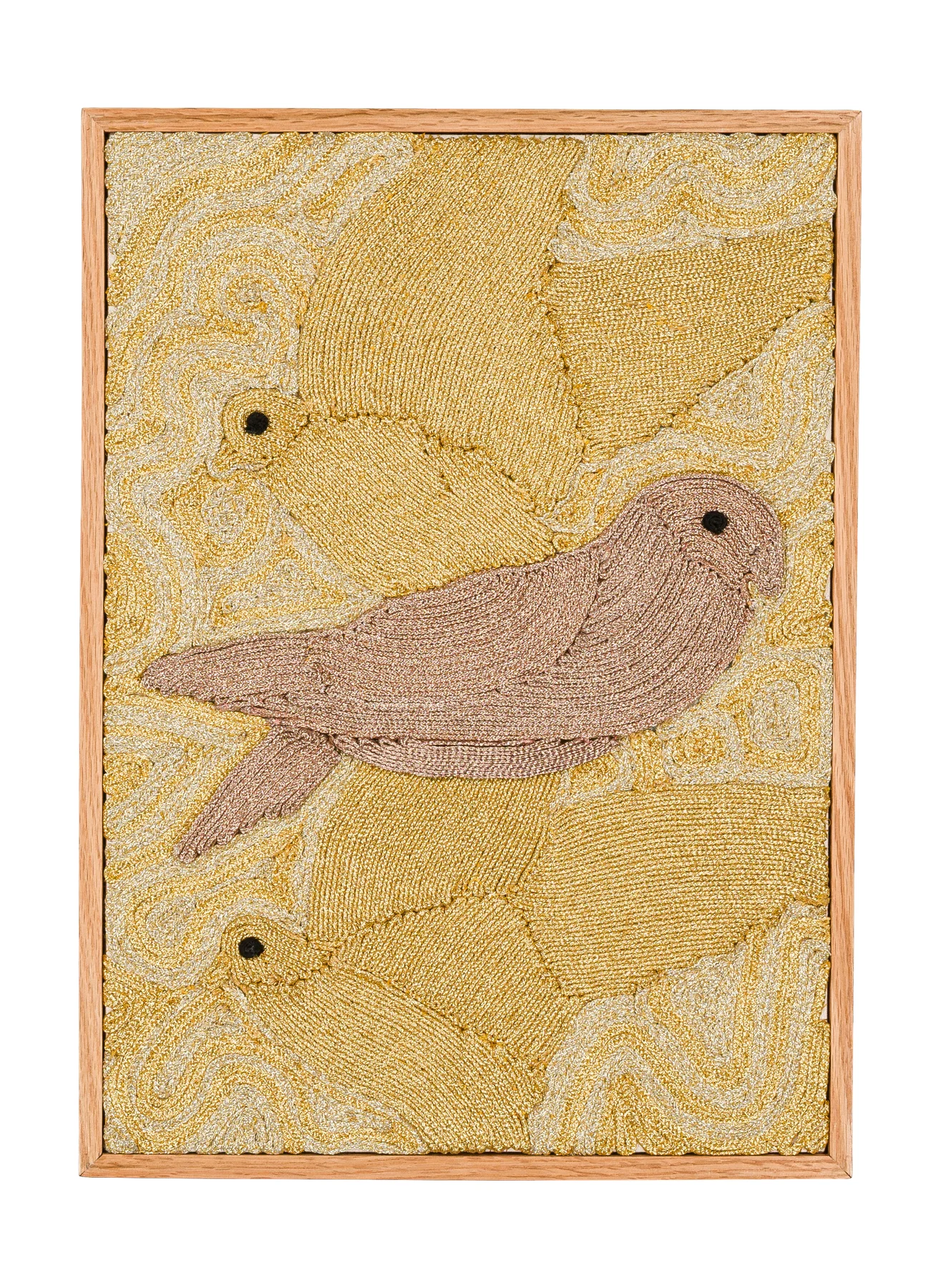
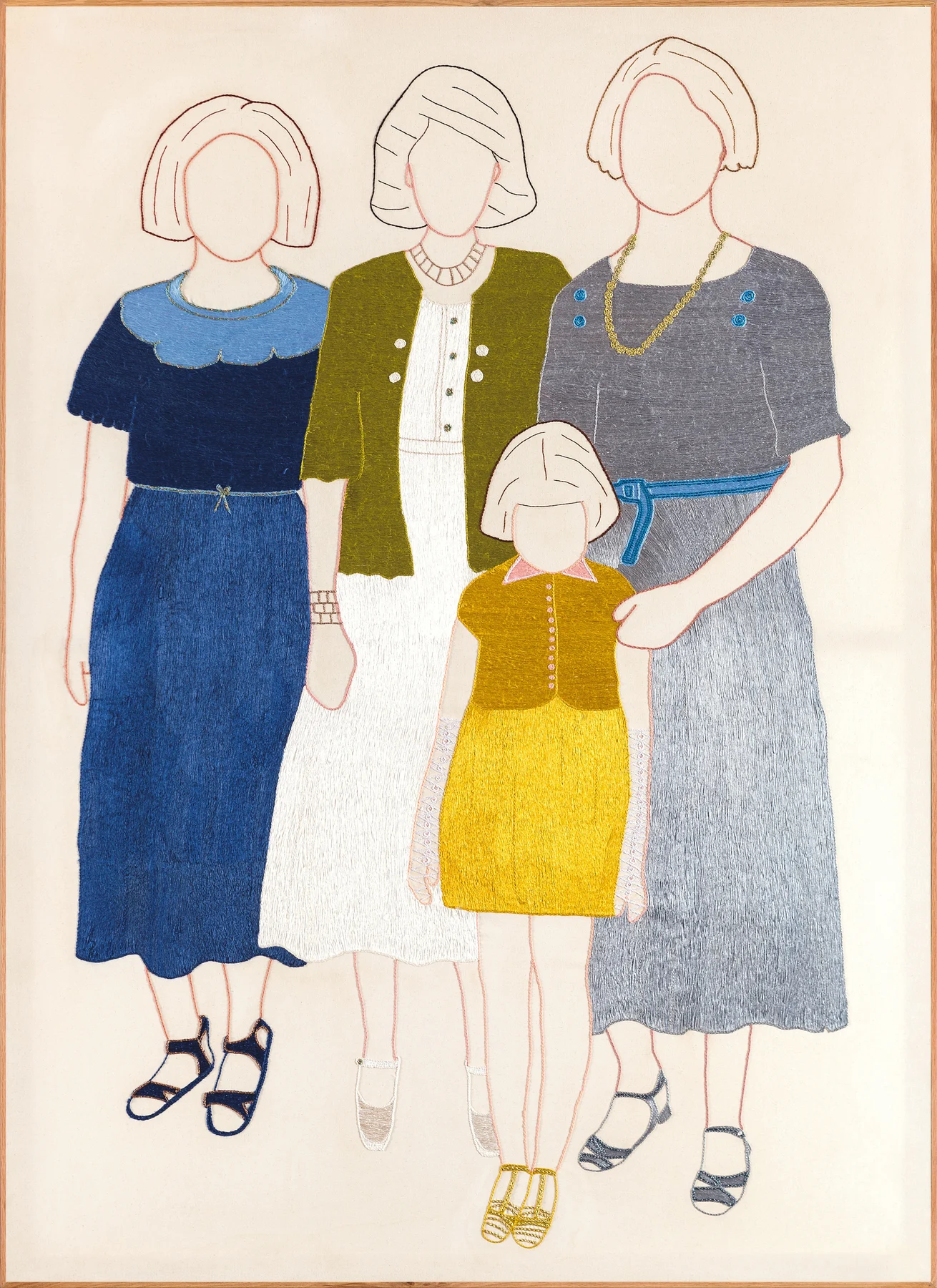
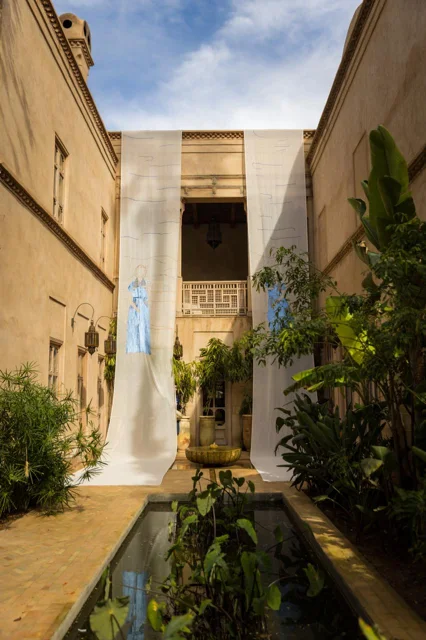
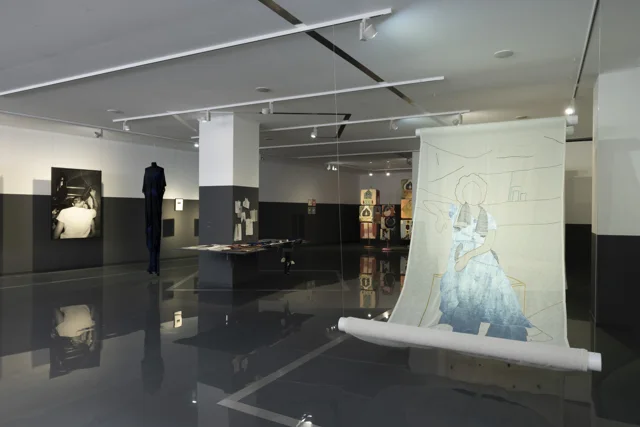
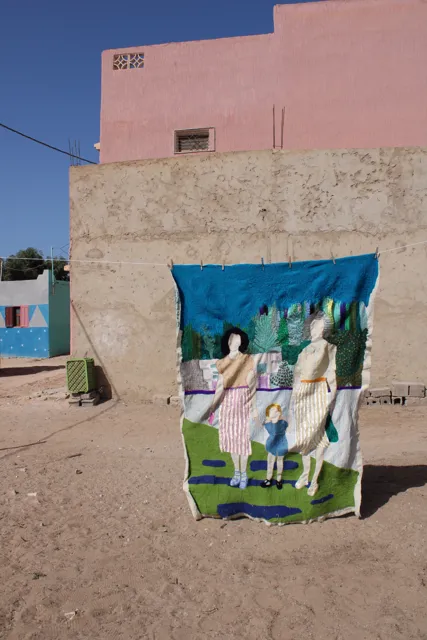
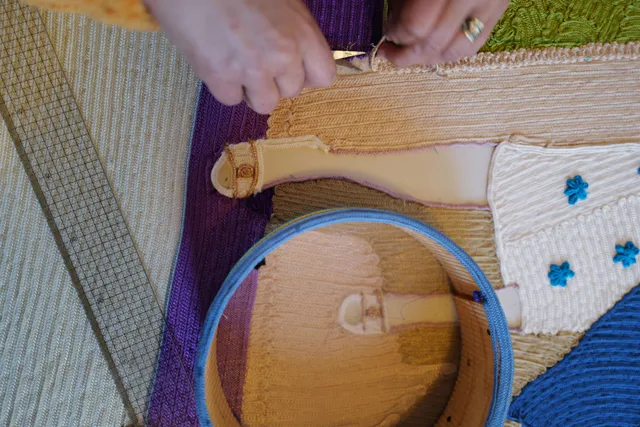
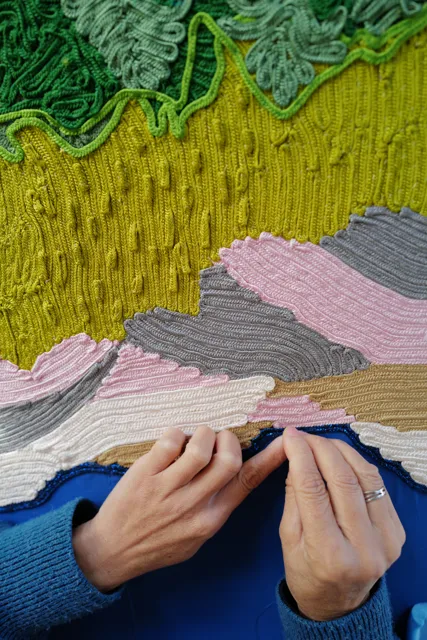
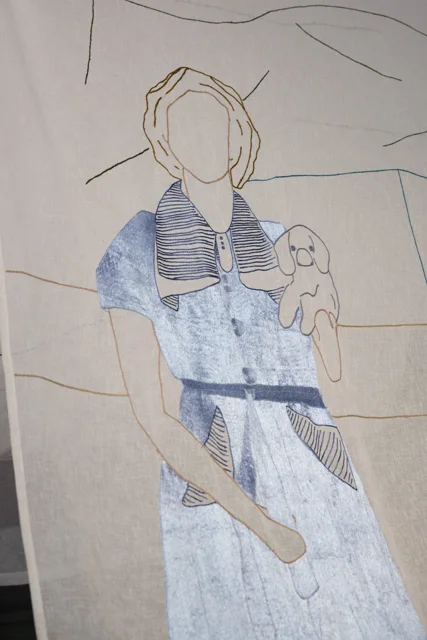
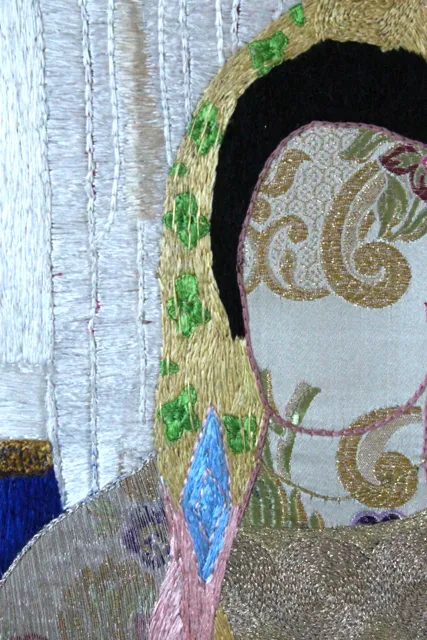
The studio produces large-scale embroidered works combining traditional Moroccan techniques - Sabra embroidery and Sfiffa passementerie - with contemporary textile practice. Each piece can take several months to complete. Works begin with Derhy's watercolor paintings from photographic archives, which then become the foundation for complex embroidered pieces. Technical decisions - thread selection, color palette, stitch type, composition - are made collectively within the studio.
The studio operates on principles of shared authorship and fair labor. Contributors are fully credited in exhibitions and publications. Work is remunerated, schedules are flexible, and the studio provides ongoing technical training. In a region with limited economic opportunities for women, the studio functions as both an artistic production space and a site for skill development and stable employment. Beyond production, the studio hosts visiting artists and art professionals, creating dialogue between traditional techniques and contemporary practice.
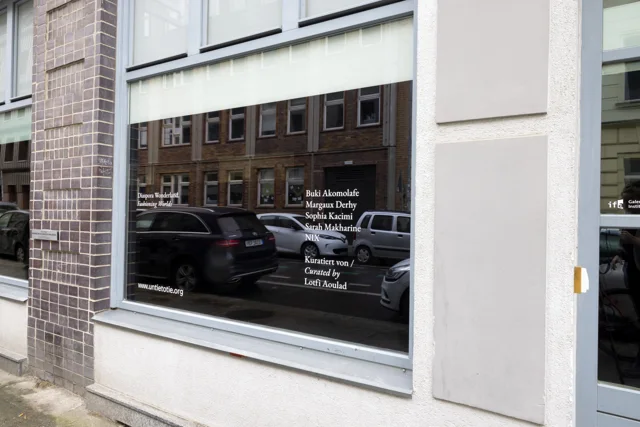
Works produced at the studio have been exhibited at 1-54 Contemporary African Art Fair (Marrakech, London), Menart Art Fair, Akka Art Fair, Le Cercle de L'Art, Galerie L'Atelier 21, Tabari Artspace, Jnane Rumi and soon to Galerie 208, IZZA × Institut Français and more.
They embroider
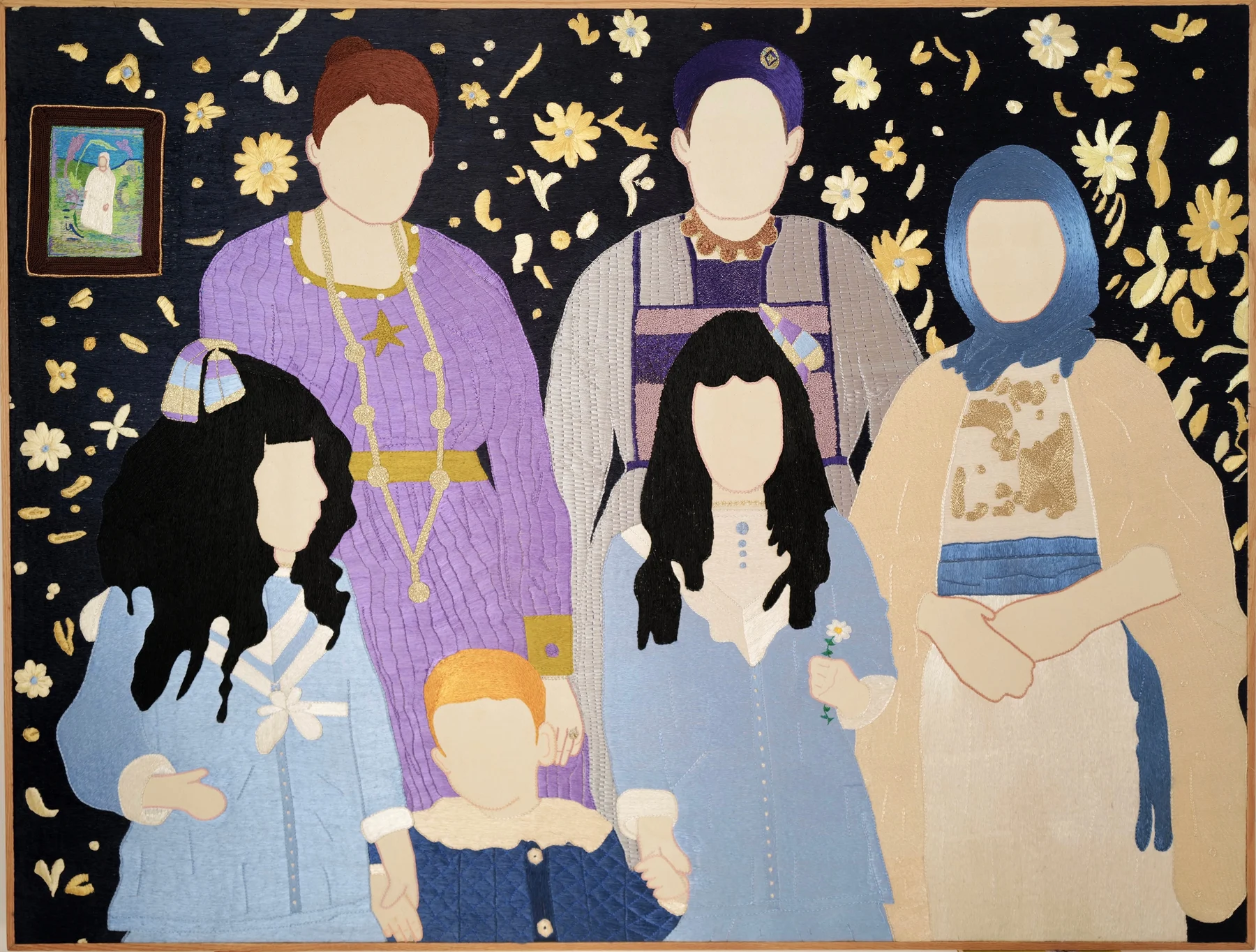
Women from Sidi R'bat embroider with Margaux Derhy. They choose not to show their faces. Their names are on every work they made, and on the exhibition wall labels.
- Khadija Ahuilat
- Hanane Ichbikili
- Aïcha Jout
- Khadija Toubali
- Rahma Chabi
- Nouzha Oubal
- Fadma lChgar
- Fadma Bahman
- Hadia Nachit
Together, they embroidered Quatre sœurs, Essaouira, 2026.
Sabra, cotton, silk threads, sfiffa, watercolour
Hand embroidery, machine embroidery, sfiffa passementerie
30 × 40 cm to 200 × 300 cm
4 to 12 months per large work
Two vocabularies, one thread
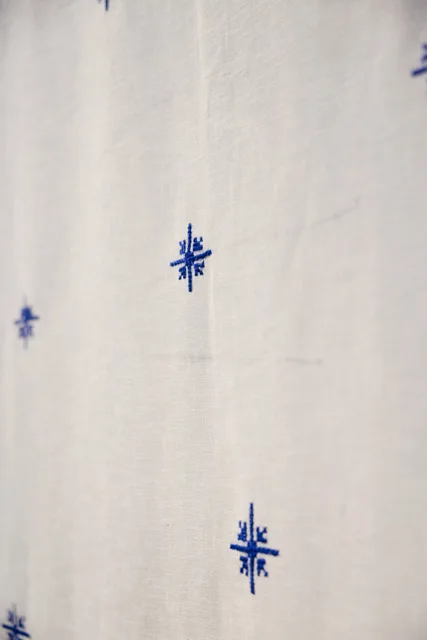
At the studio we juggle between the stitches of Morocco and those of France. Some come from the kaftans of Fez, Rabat and Tetouan, others from French embroidery manuals. In the same work, they answer each other.
From Morocco
- Couched sfiffa
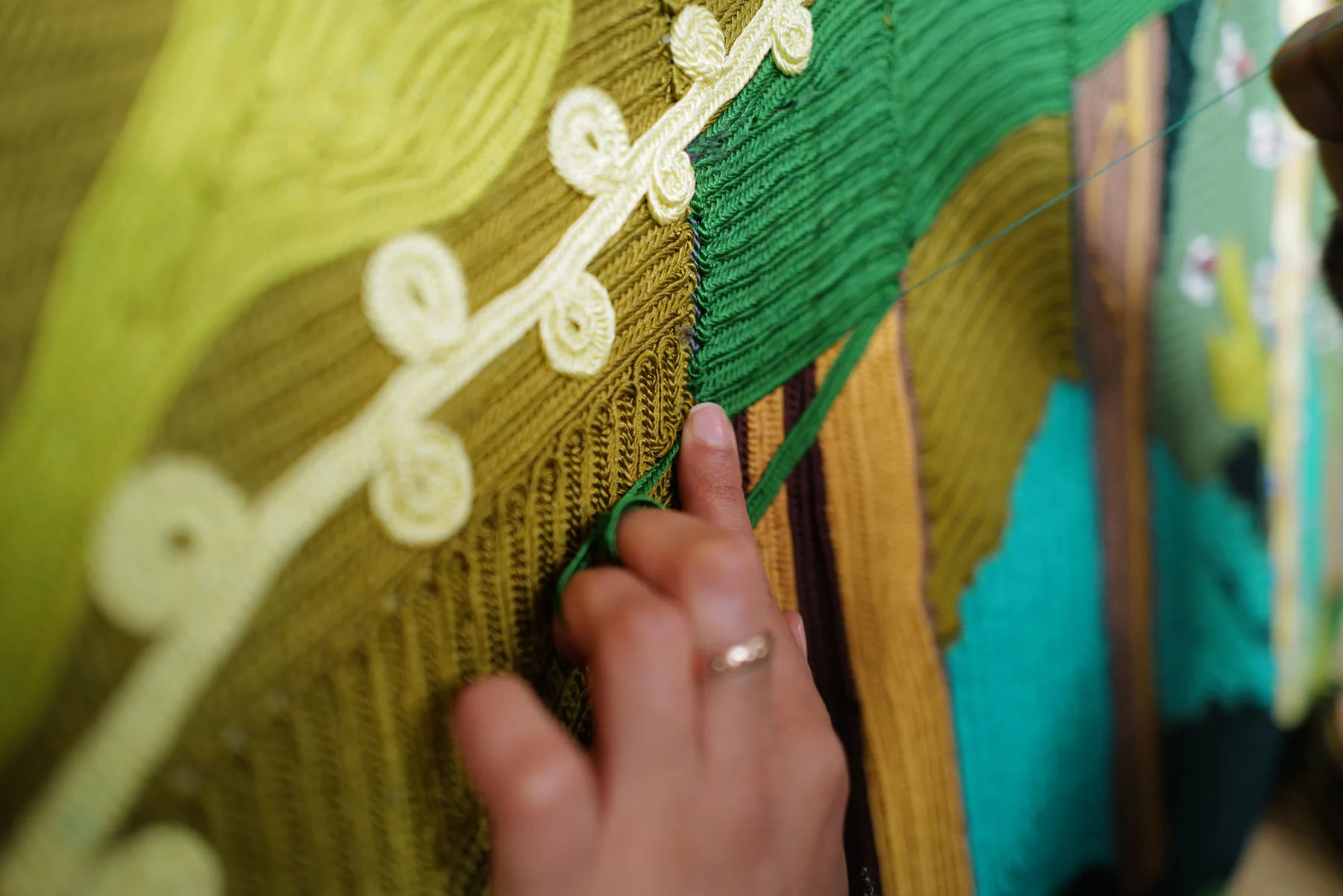
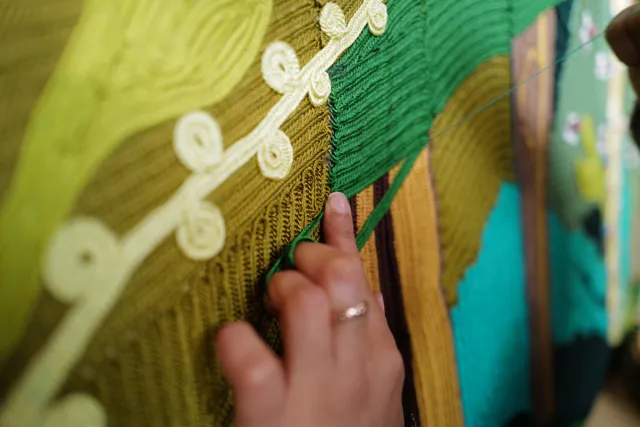
The passementerie cord, laid down then tacked stitch by stitch. It draws our outlines.
- Terz fassi, Fez stitch
A double running stitch, identical on both sides, in geometric patterns.
- Terz rbati, Rabat stitch
Long laid satin stitches filling large flowers.
- Tarz mermma, gold thread
Gold thread stretched on the frame, couched over padding.
- Randa
The needle lace edging kaftans, loop after loop.
- Âqad, passementerie buttons
The small hand knotted buttons that close kaftans.
Chain stitch belongs to both: it runs along Moroccan kaftans, and in France it is the stitch of hook embroidery, from Beauvais to Lunéville. It is the stitch of our studio.
From France
- Beauvais tambour chain
- Stem stitch
- Satin stitch
- Long and short stitch
- Padded satin stitch
- French knot
- Straight stitch
- Blanket stitch
- Herringbone stitch
- Feather stitch
- Cross stitch
- Running stitch
Embroider with us
Choose a needle, a stitch and a thread, then draw on the linen with your mouse or your finger. The needle follows your line stitch by stitch, at the pace of a hand: it is slow, as in the studio.
Follow the thread
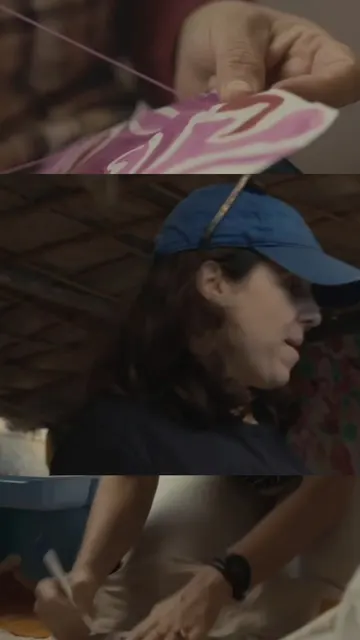
Inside the studio in Massa: hands, threads, archives, the slow making of each work.