Meet the French-Moroccan Artist Collaborating With Amazigh Women to Craft Embroidered Artworks

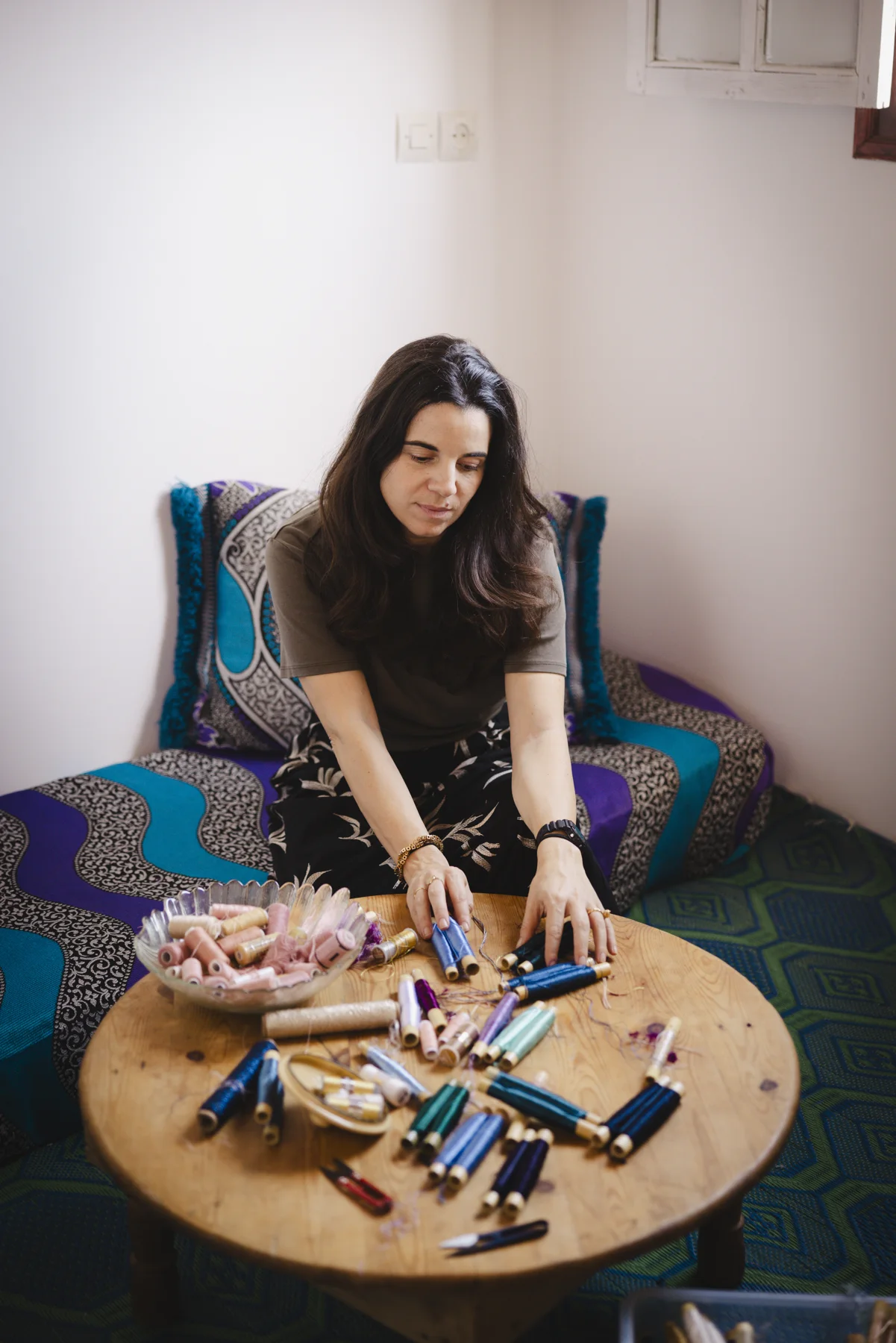
In the coastal village of Sidi R’bat, with a population of no more than 500 people in southern Morocco, a sisterhood of ten women have devoted themselves to practicing the delicate art of hand embroidery. Working together over the past three years in a small yet productive studio, they have been brought together through the French-Moroccan embroidery artist Margaux Derhy.
“It’s completely changed my life,” she said of the communal art project that happened spontaneously. It all began during the Covid-19 pandemic, when Derhy, who was then based in London, was visiting her family in Morocco. Eventually, she stayed behind. “Life brought me back to Morocco,” she told T Magazine MENA. “In the beginning, we always want to escape, we want to make our own paths. But then you go back, you feel your roots. You feel you belong here. You meet people and make good friendships, because you have the same mentality and values.”
Born in Paris to a Moroccan father and a French mother, Derhy was exposed to art from a young age, thanks to her paternal grandmother, who was a sculptor in the French capital. “Both of my parents were working a lot, so I spent a lot of time with my grandmother,” Derhy recalled. “She was doing her own thing and she was really serious about it. It was not just to play around or to spend time. I could feel that she was devoted to her art, and that was really important I guess for me to understand how serious it was.” Derhy later decided to study art, becoming a student at Central Saint Martins College of Art and the Royal College of Art. And while she thought she would settle in the UK, life had other plans in store for her.
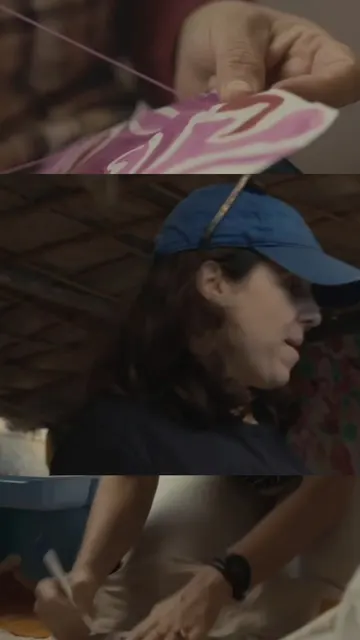
Derhy’s initiative in Massa began through a conversation she had with two local women, Khadija Ahuilat and Aicha Jout, and the trio decided to collectively work together with other women in the village. “I didn’t have a plan. I was just following the emotion, the need, and the will to build something together,” she added. Today, the studio operates seven hours per day, five days a week, with a three-hour break, and produces pieces that take two to eight months to complete, depending on size.
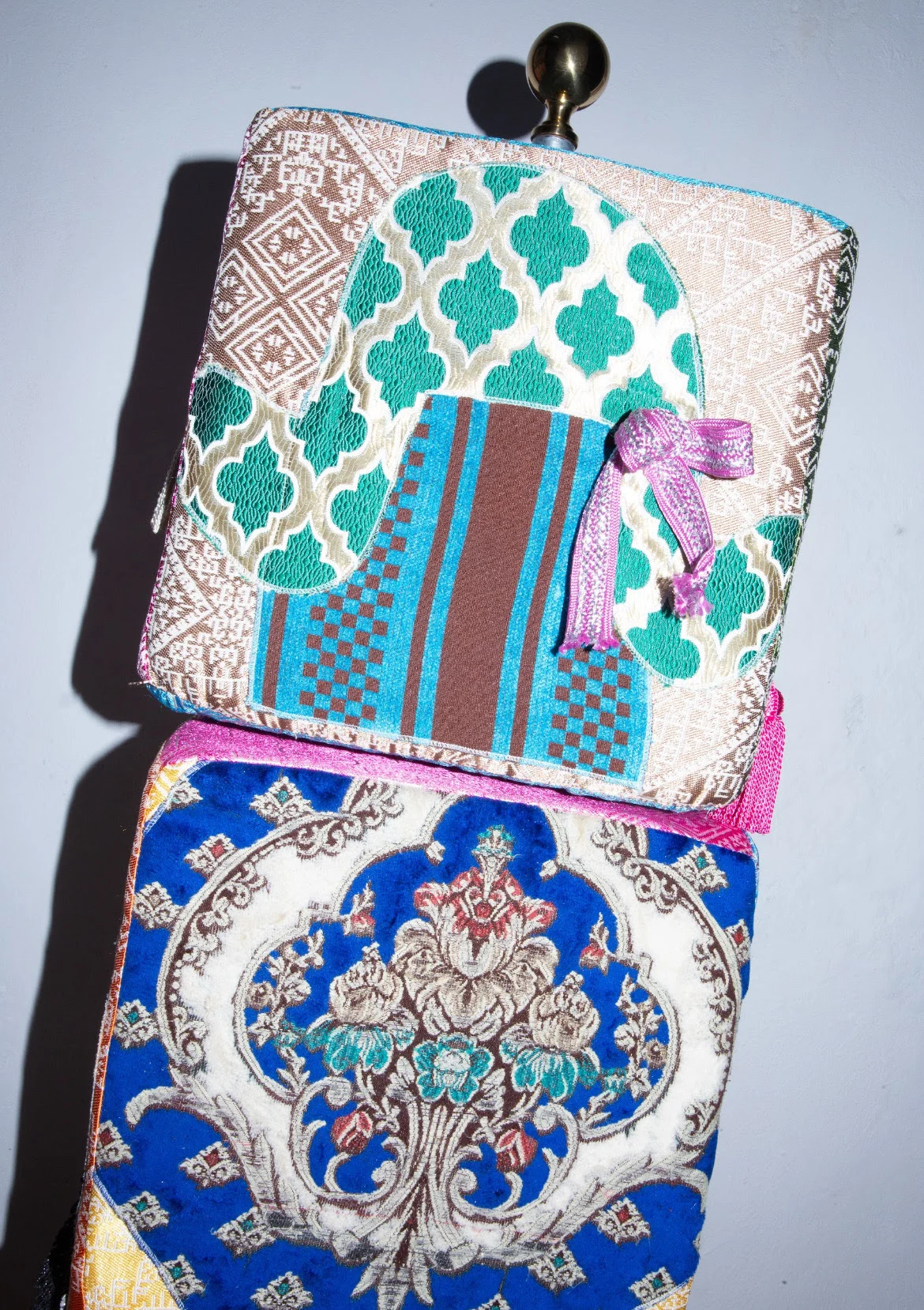
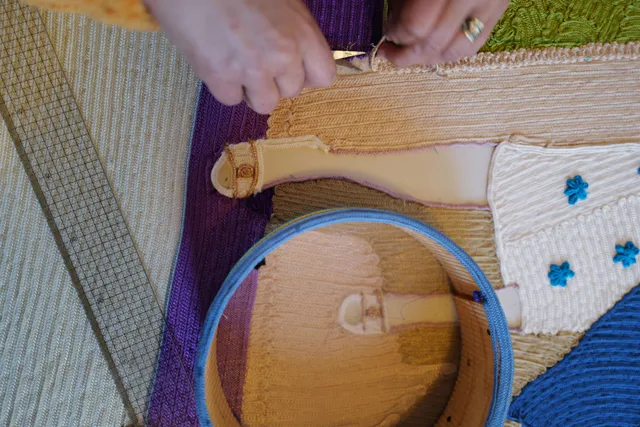
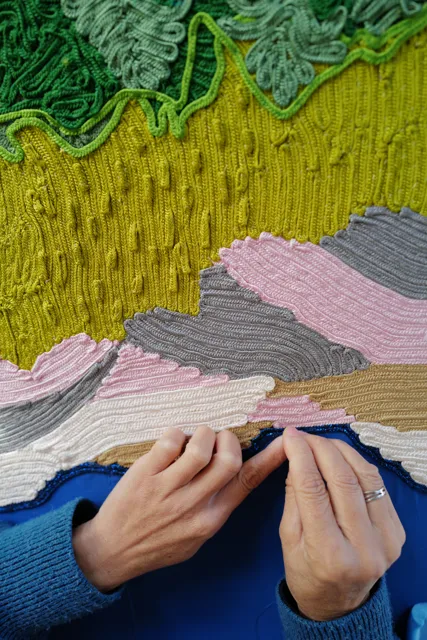
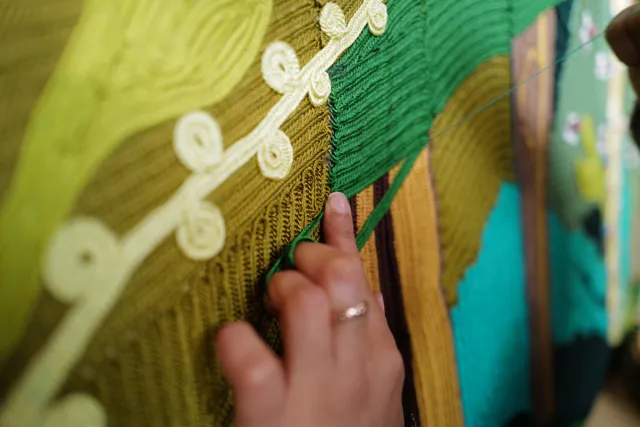
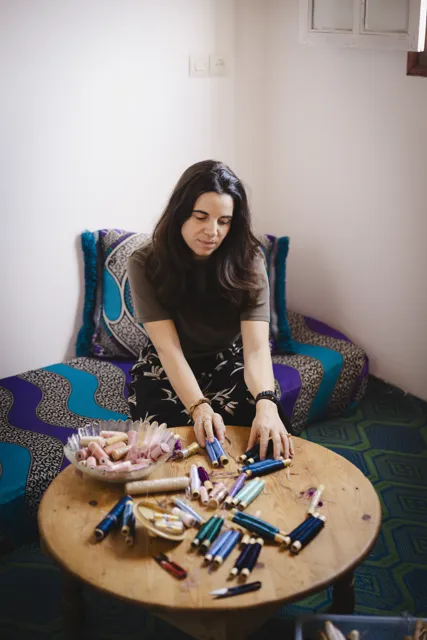
The embroiderers use different kinds of threads for their pieces, like the shiny and strong “sabra” thread, and recently, they have been working with a thicker kind of thread, “sfifa”, traditionally used to embellish kaftans. The act of embroidering is one of precision and calmness. The age-varying embroiderers, many of whom are unmarried and lack higher education, earn their living and support their families through their studio work, which has also built a sense of camaraderie amongst themselves.
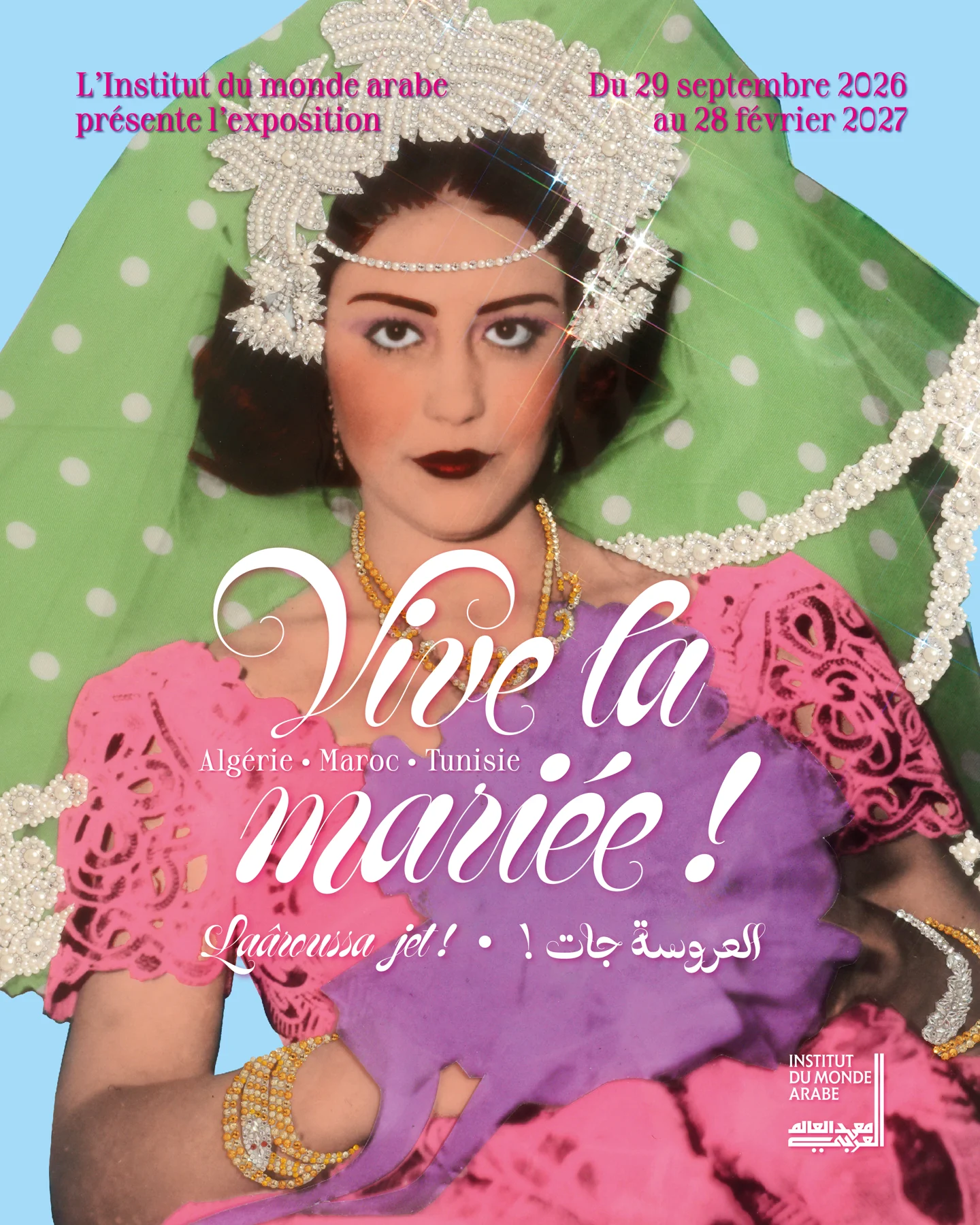
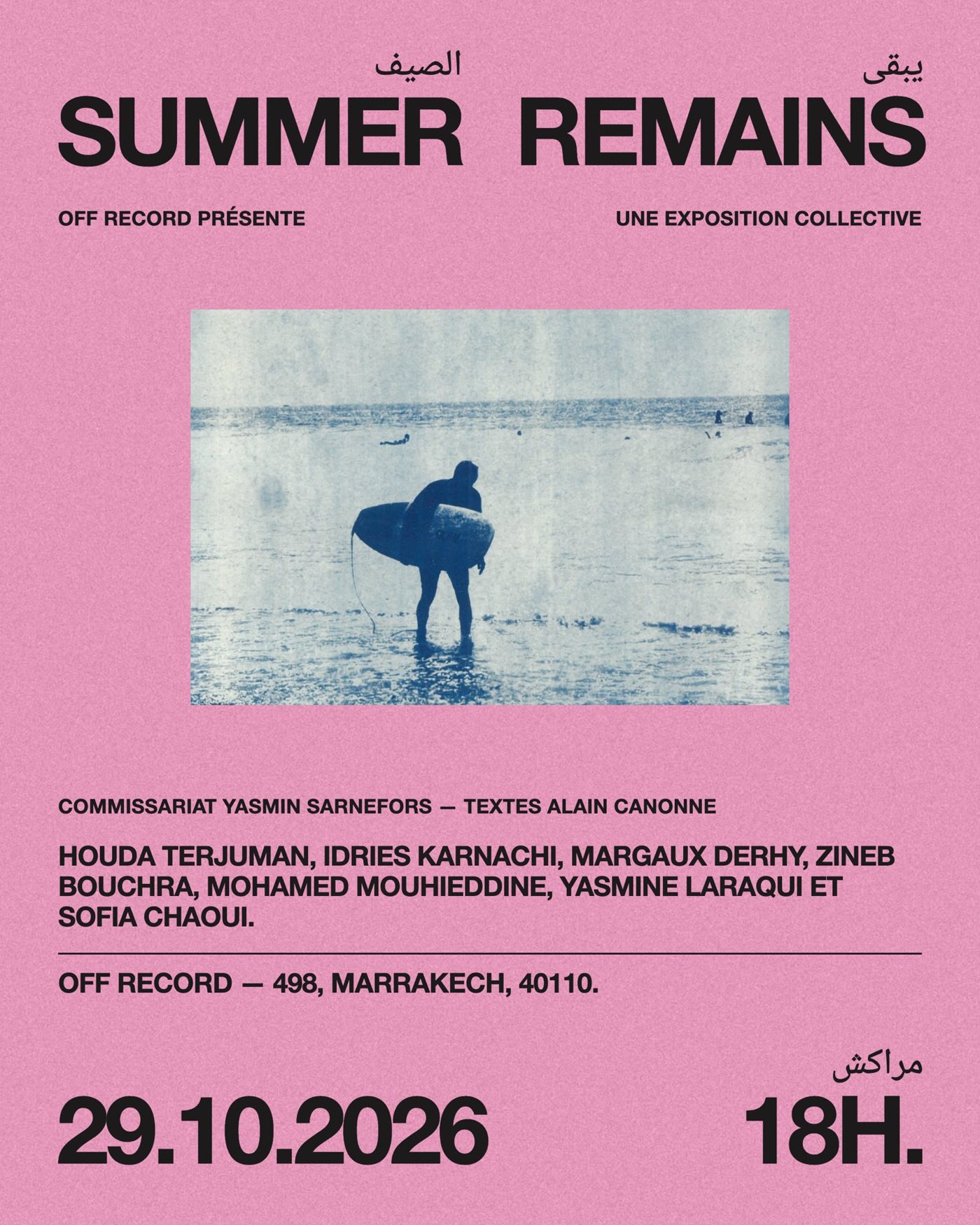
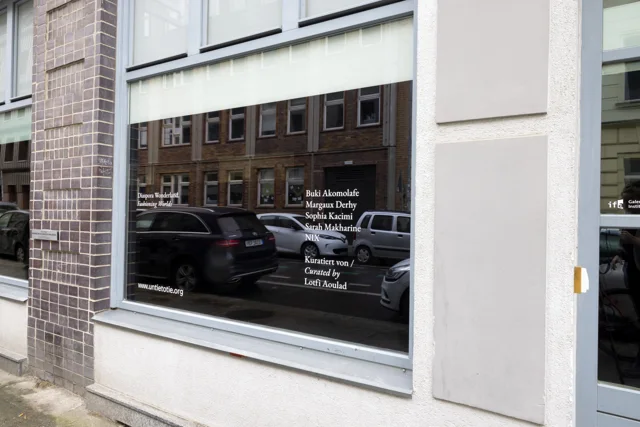
“At the studio, they are speaking all day, having fun, and working together. They all became really interested in embroidery, art, and having exhibitions. They’re always pushing me, saying ‘We need to do even more.’” So far, their pieces have been showcased in art fairs and galleries in the Middle East, North Africa, and Europe. Later this year, Derhy will be participating in exhibitions at the Institut du Monde Arabe and Galerie Loft, both in Paris, and Tabari Art Space in Dubai. Another important plan for Derhy is the ongoing construction of a little house, designed by Rabat architect Driss Ben Abdallah, to accommodate their artistic activities.
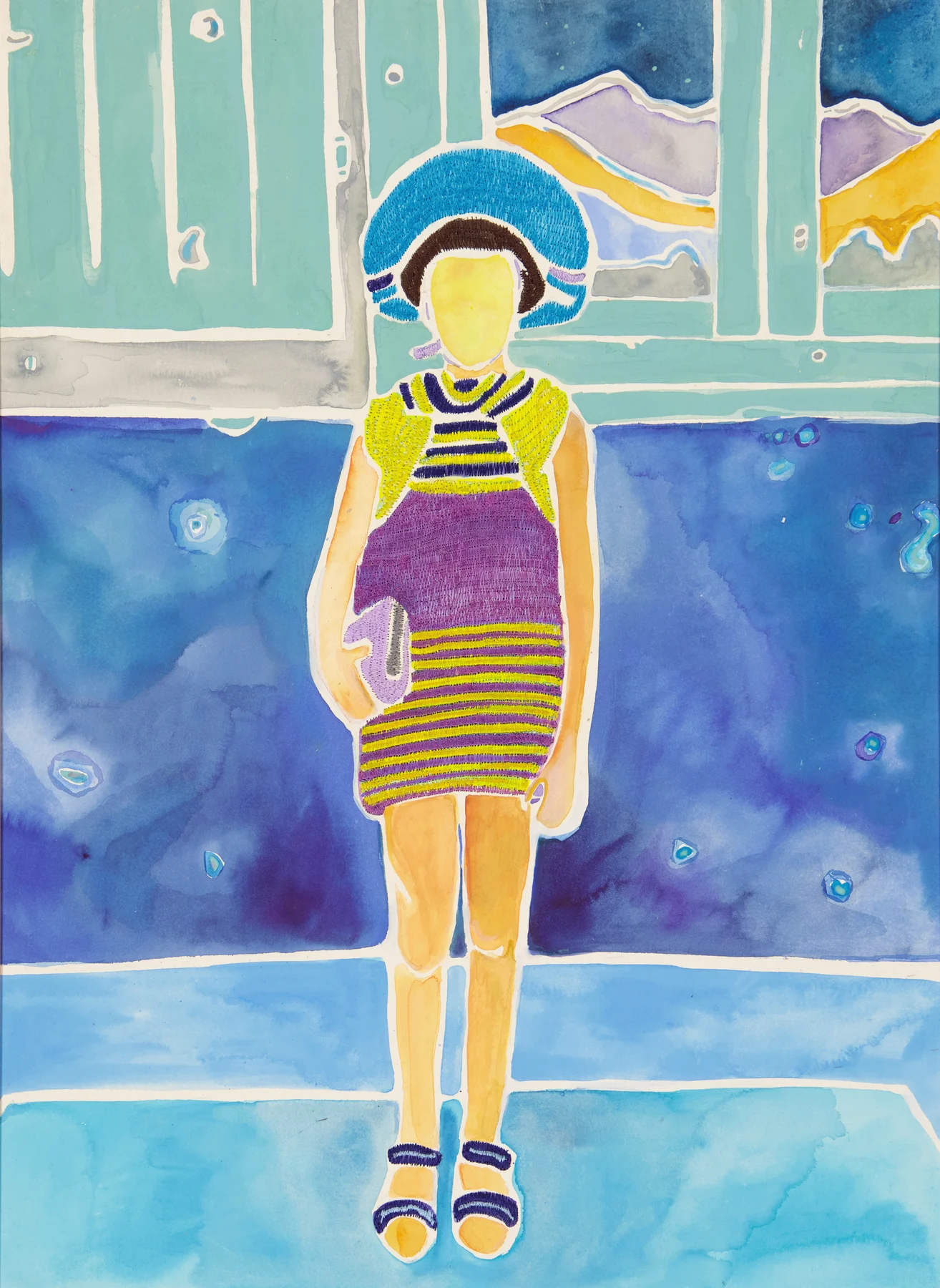
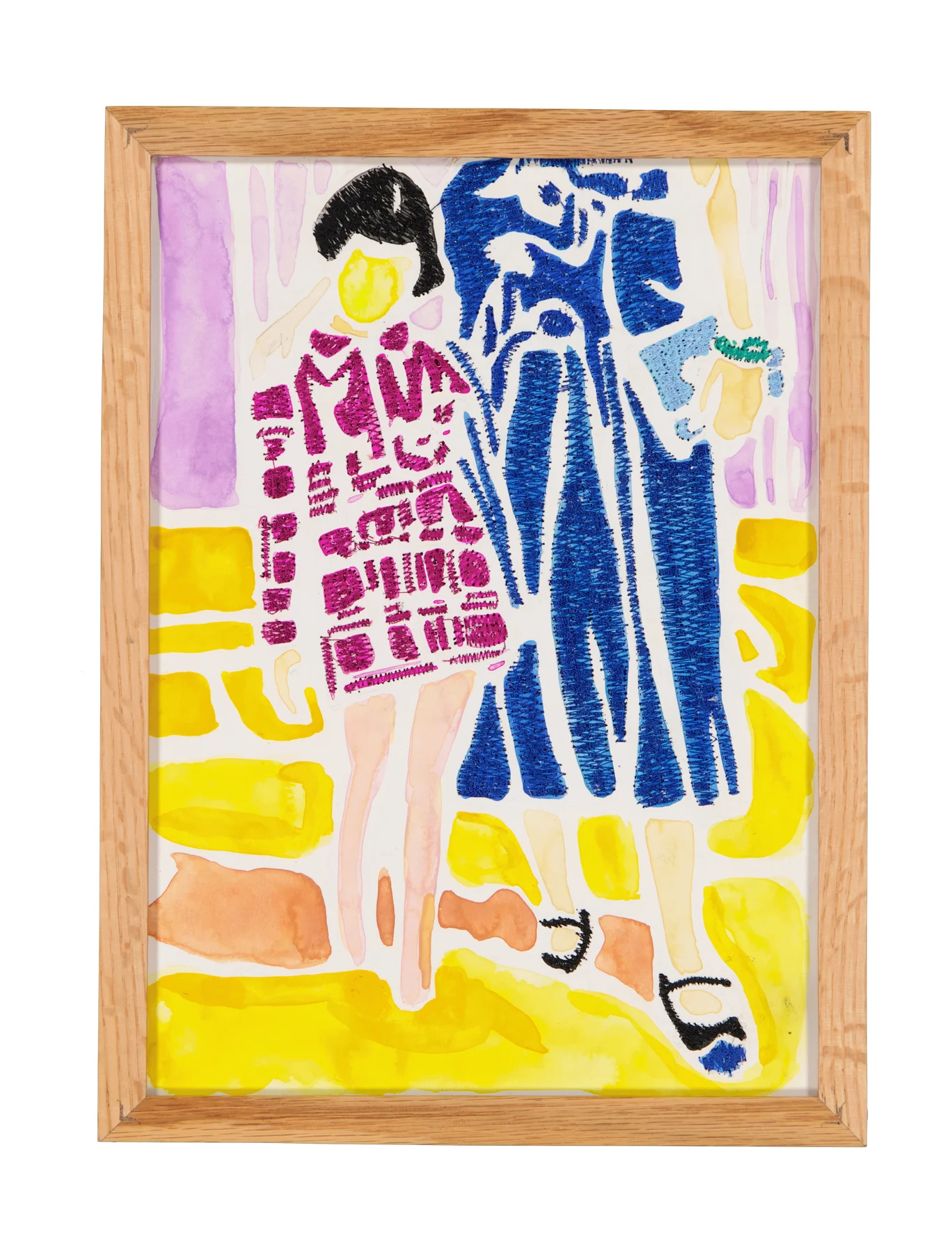
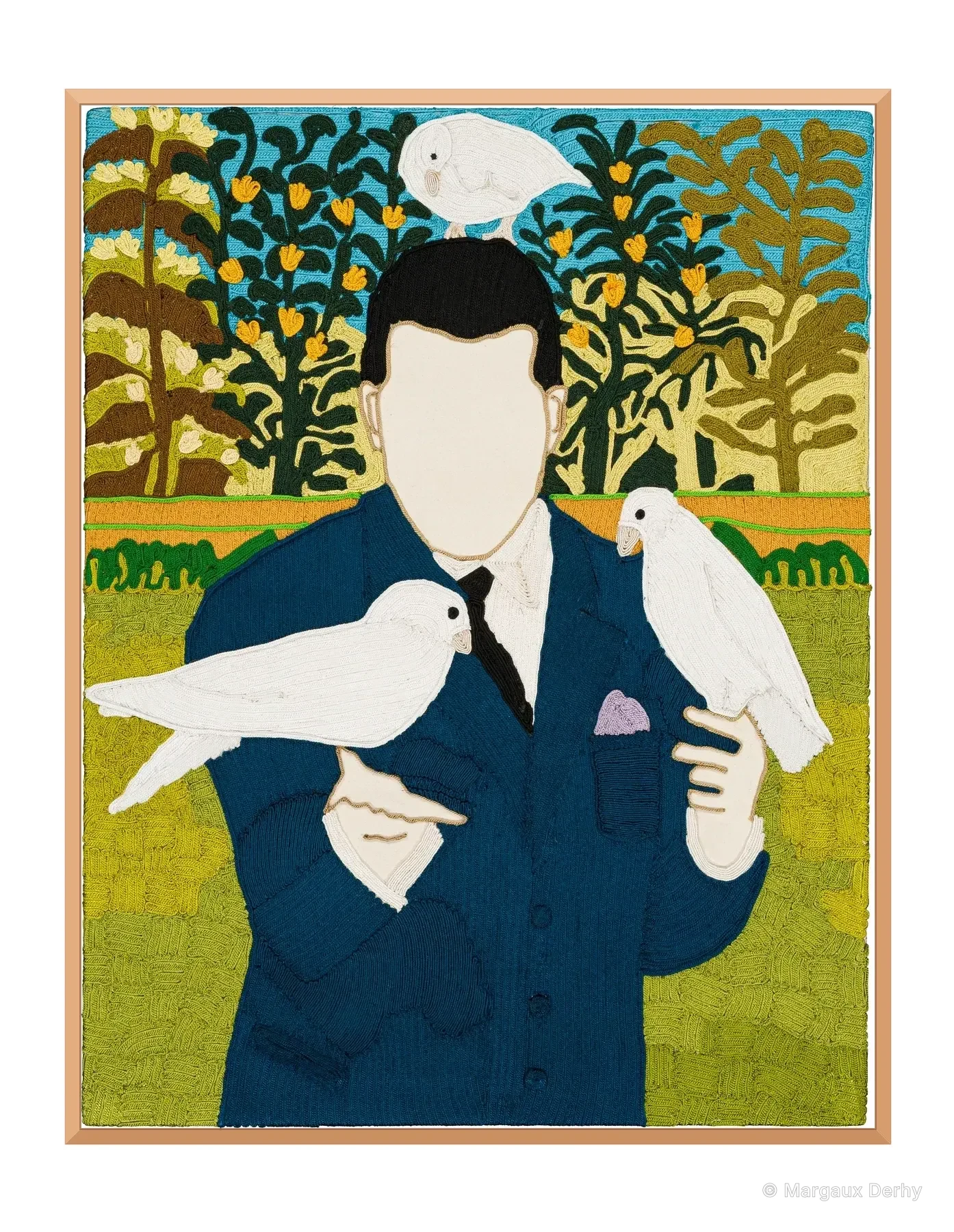
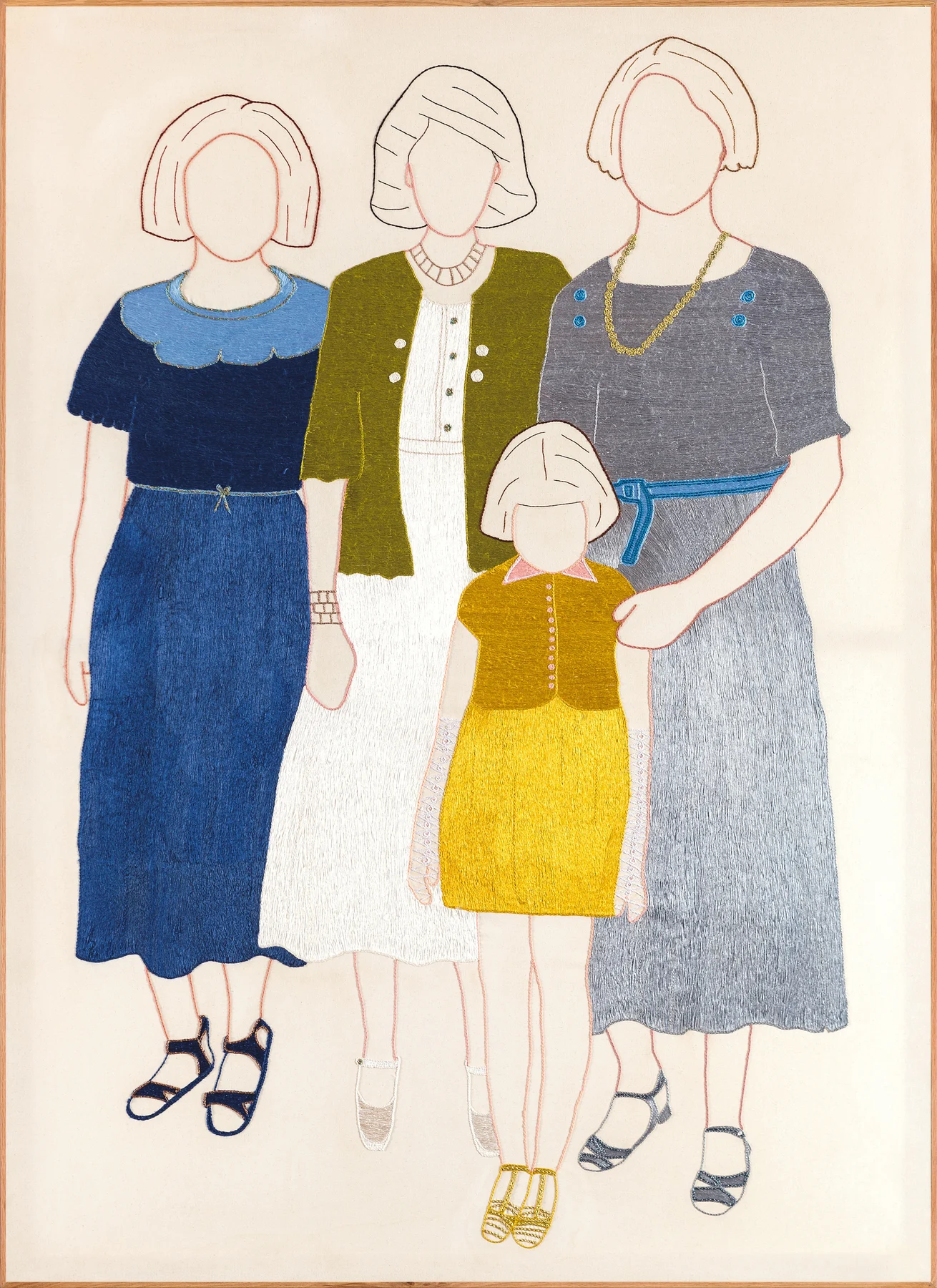
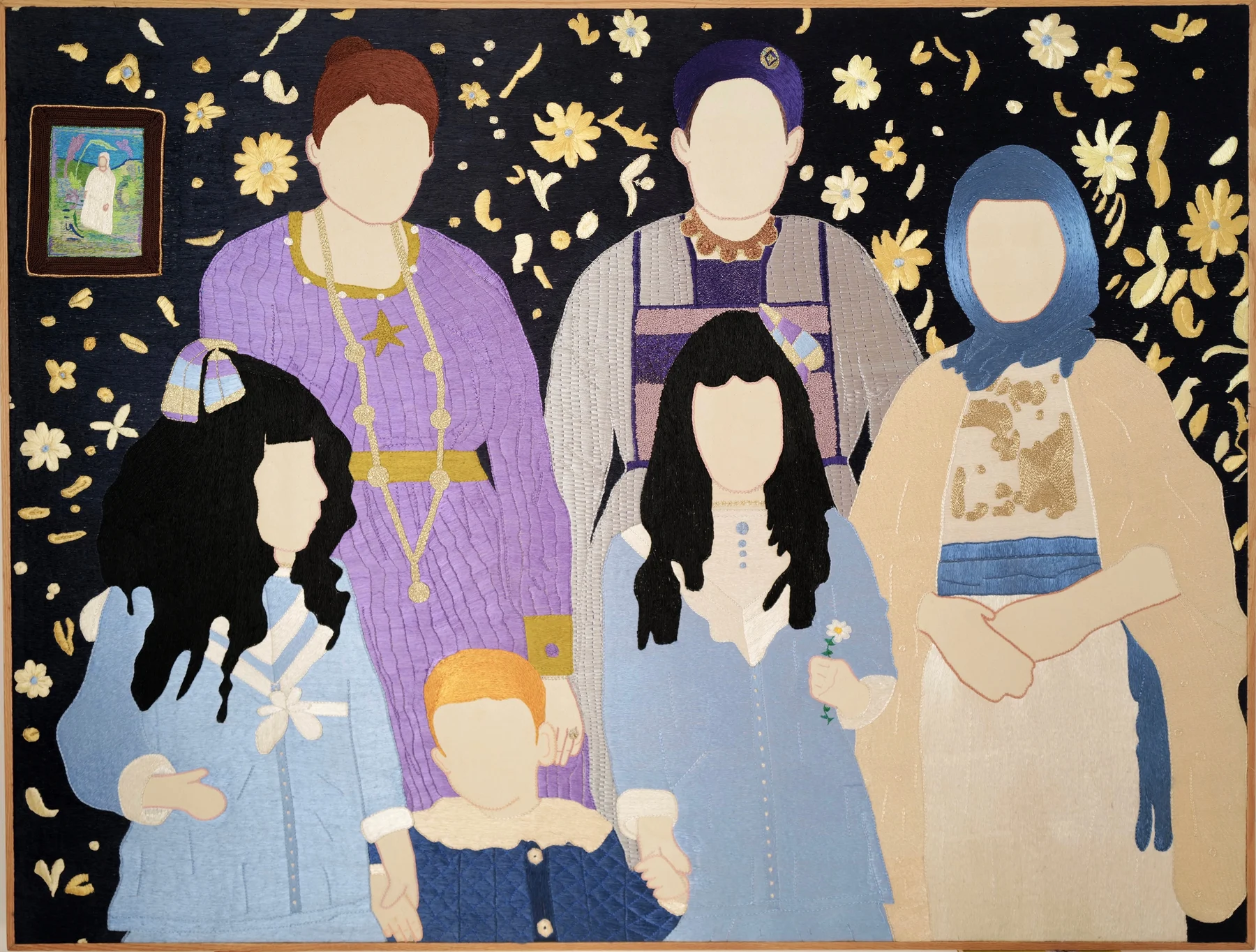
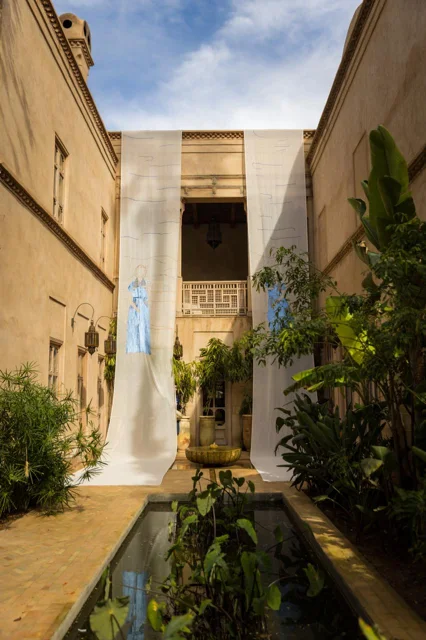
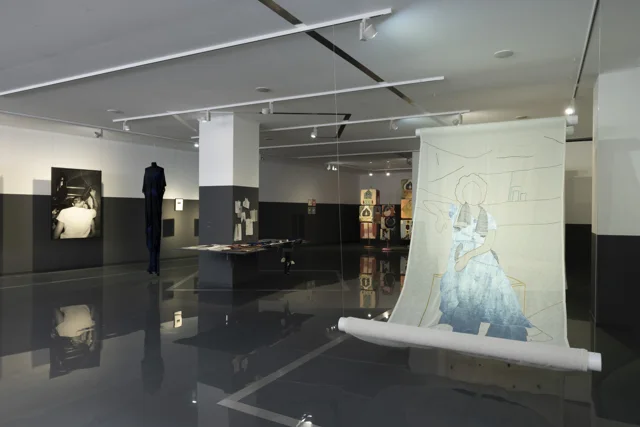
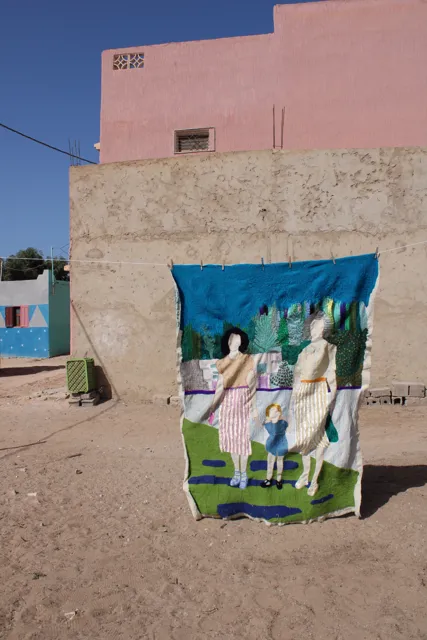
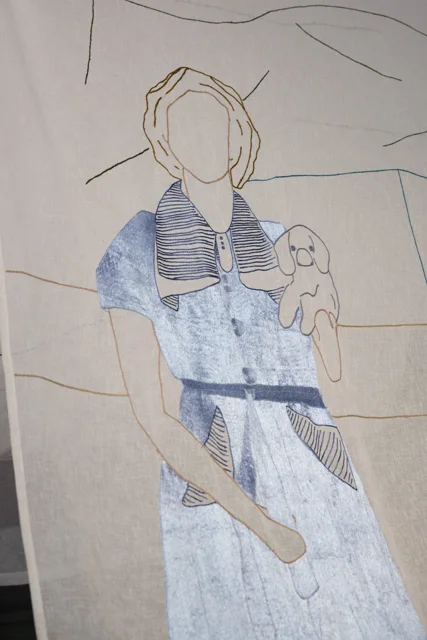
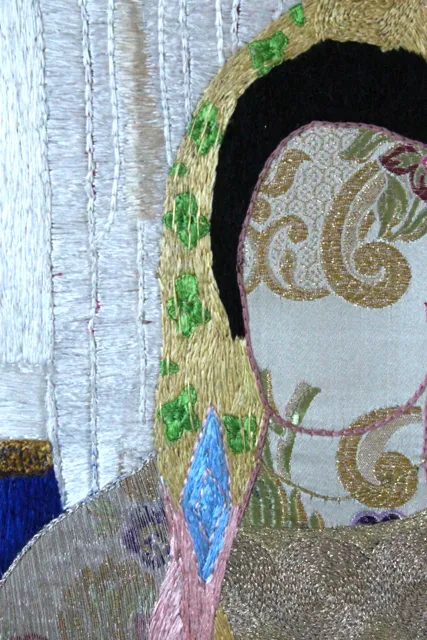
Derhy, who has a background in painting, produces with the indigenous Amazigh women gentle, light-colored figurative pieces, based on photographs from her family archive. They render intimate, snapshot-like moments of wedding scenes, family outings, and outdoor activities. The works look into the universal tropes of memory, love, loss, and family dynamics. The stitched figures noticeably don’t include any facial features – just blank faces.
The faceless aspect of the compositions stems from a personal tragedy that marked Derhy’s life – her younger brother’s death. “When he died, I really wanted to look for him,” she explained. “I was looking a lot for his pictures in the family albums and I would spend my day painting him, but I didn’t want everybody to understand that I was in such big grief. So I started to not paint his face. For some people, it can be strange, because it’s a really sad topic. But for me, it was about trying to bring back softness into my life through art.”
For Derhy, the project is not about “empowering” the embroiderers, but rather collaborating with them in a mutual and fun process. “I look really French, so sometimes some people think that I’m a French saviour, trying to save these women in the village. But there is a reality with their situation,” she said. “I don’t like the word ’empowering’, but they’re also empowering me. We are just trying to do something seriously together and to make art. To support each other as women, as a team – that’s for sure.”
Previous
|
Next
2
of 45